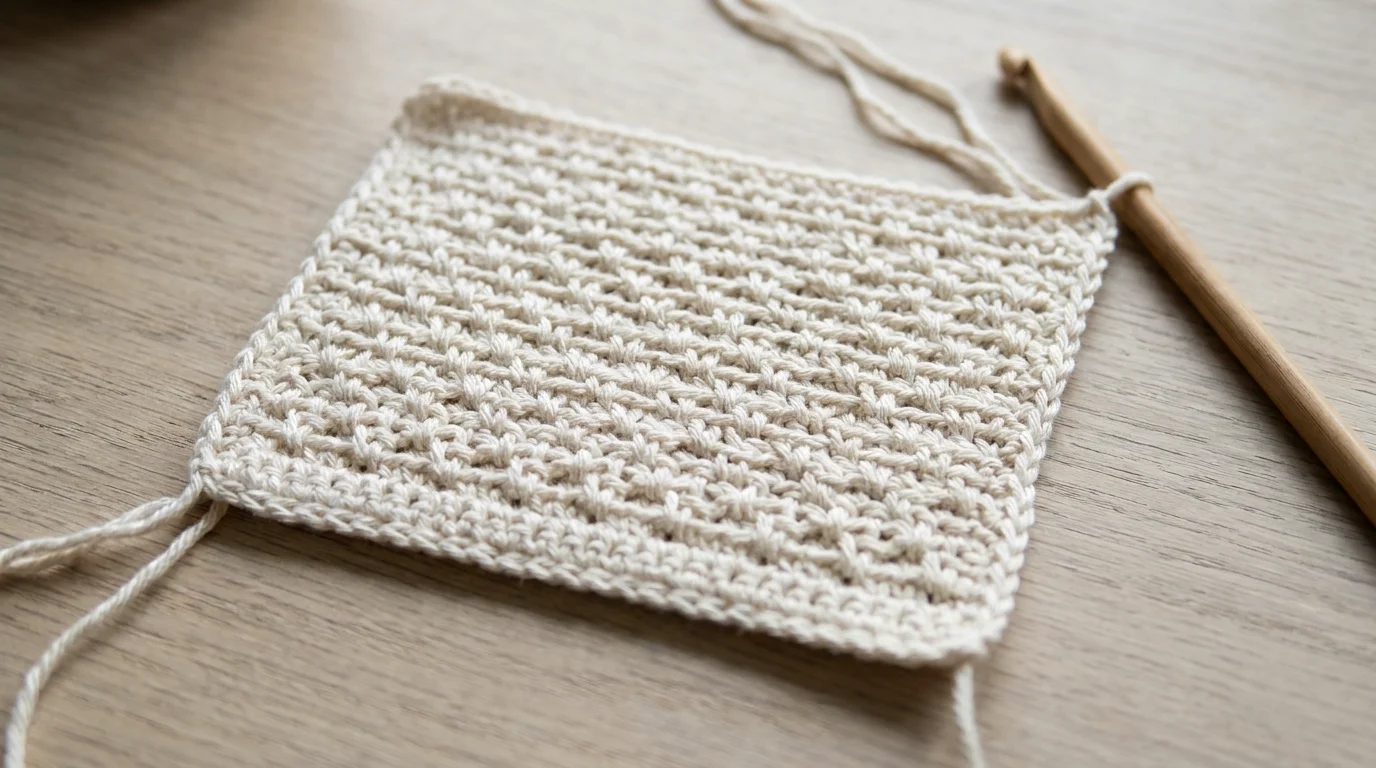
Moss stitch crochet is two stitches, alternating, and that’s the whole trick. Single crochet, chain one, repeat. What separates it from plain single crochet is where the hook goes — each stitch drops into a chain space instead of into a stitch below.
Do that on every row and the fabric stops looking like stripes. It starts looking like a grid.
If you can chain and single crochet, you already have both skills. What takes a few rows to settle is the edges. They creep. Most of what follows is about that.
And one thing worth clearing up before you commit an evening to it. This same fabric gets published as moss stitch, linen stitch, granite stitch, and woven stitch. Four names, one structure. If you’ve ever followed two tutorials that looked suspiciously similar, that’s why. Everything here applies to all four.
The short version. Single crochet and chain one, alternating, with each new row landing in the chain spaces of the row before. Even number of chains to start. Dense fabric, stubbornly shape-holding, good for blankets and scarves and bad for anything fitted. Works flat, works in the round.
Table of Contents
What Moss Stitch Crochet Actually Is
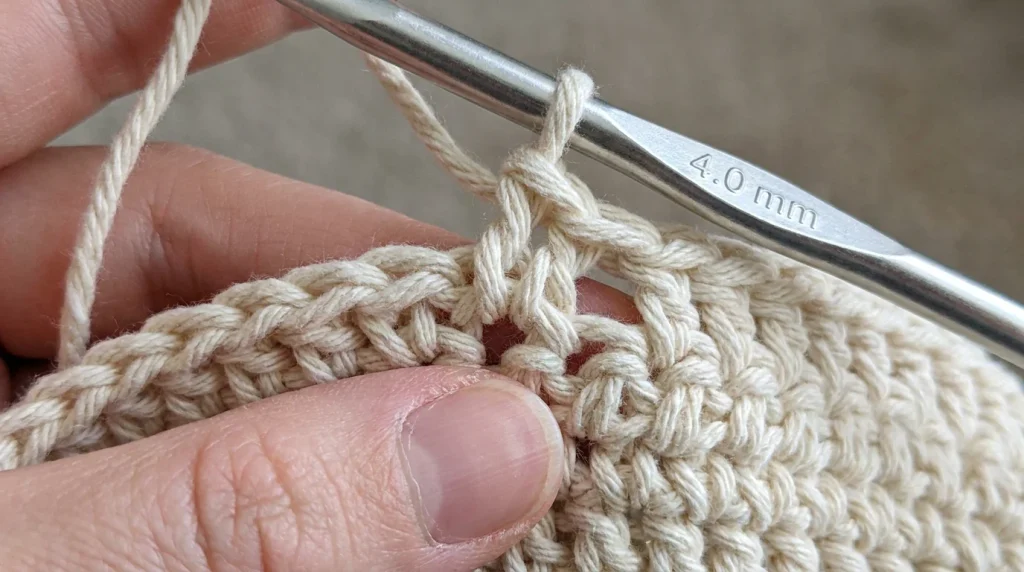
Two stitches, repeated. That’s the inventory. No taller stitches to learn, no special hook movement, nothing that needs a video to make sense of.
What makes it distinctive is positional. Half of each row is a chain space rather than a solid stitch, so the fabric can’t collapse into rows of identical bumps. The spaces sit offset from the stitches above and below. That’s the mechanism, and there isn’t more to it.
Where the Woven Look Comes From
Row one puts your single crochets into the foundation chain. Row two puts them into chain-one spaces, which sit half a stitch to one side of where the row below went. Repeat that sideways nudge and the eye gives up on lines.
Which brings up something worth knowing before you commit to a large project. Half of every row is empty space, and empty space in crochet means fabric that won’t give. A blanket made this way survives a decade of washing without sagging at the corners. A cardigan made this way feels like a coat of armour. Not in the good sense.
Want more drape, go up a hook. Want more structure, leave it where it is.
Yarn and Hook for Moss Stitch Crochet
Any yarn works. Medium weight is kindest while you’re learning, mostly because chain spaces stay visible under a lamp at eight in the evening.
Chunky builds fast and feels satisfying in your hands. The catch is that the spaces can close up, and once they do you’ve lost the woven look and gained a thick, fairly ordinary fabric. Some people are happy with that trade for a scarf. I wouldn’t make it for much else.
Beyond that: a hook, a yarn needle, scissors. A stitch marker is worth having for the first few rows while you’re still learning to spot the turning chain, and again once you go round.
How Many Chains to Start Moss Stitch Crochet
Even number. No exceptions worth the trouble.
An odd count leaves half a repeat dangling at the end of row one and no clean way to rescue it. The number sets your width, so there’s no figure I can hand you without knowing what you’re making. Chain 20 or 24, work four or five rows, measure the swatch, scale from there.
Say 24 chains gives you six inches and you want forty inches of blanket. Divide forty by six, multiply by 24, you’re near 160. Round to the nearest even number. If arithmetic on a Sunday isn’t appealing, work the swatch out first and scale later.
Moss Stitch Crochet Abbreviations
- ch chain
- sc single crochet
- sl st slip stitch
- sp space
- rep repeat
US terms throughout. UK crocheters should read single crochet as double crochet.
Working Moss Stitch Crochet Flat
Setup: chain an even number. Practice, 24.
Row 1: sc in the 2nd ch from the hook, ch 1, skip the next ch, sc in the next ch. Repeat chain one, skip, single crochet across, and finish with one sc in the final chain. Turn.
Row 2: ch 1, turn. Sc in the first ch-1 sp, ch 1, sc in the next ch-1 sp. Across, then one sc into the turning chain space at the end. Turn.
Row 3 onward: row 2 again.
By row four most people stop glancing at the instructions. That’s the point of it.
The Edge Problem
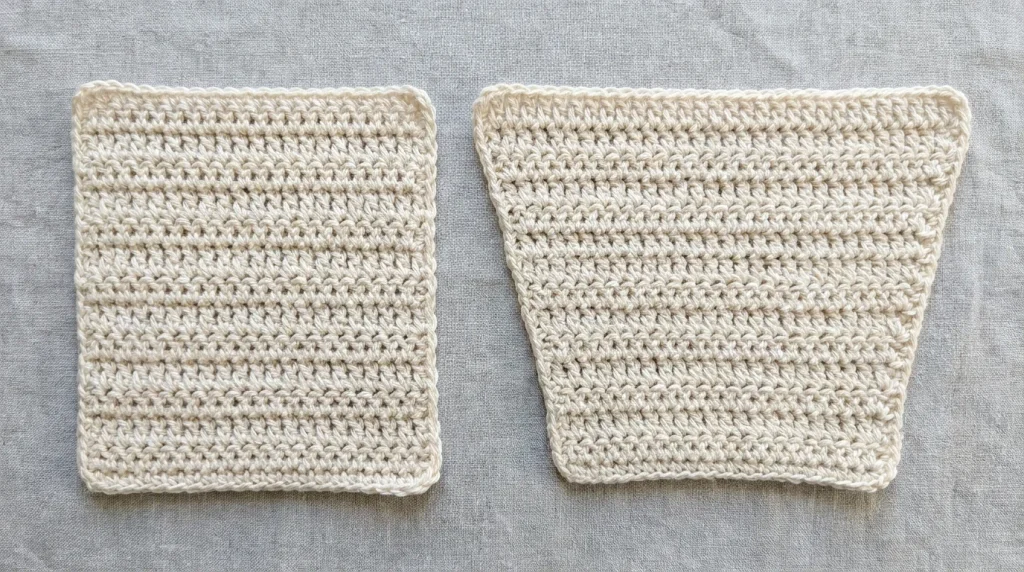
Write down your row one single crochet count. Every row after has to match it, with the same number of chain-one spaces between.
Rows that widen by a stitch each time trace back to the same mistake nearly always. A single crochet has landed in the turning chain and in the stitch beside it. There’s only room for one, because the turning chain is already sitting in that gap. Pull one out.
Counting every row gets old fast, so use your eyes instead. Flatten the piece every three or four rows and look down both edges. Two straight verticals, you’re fine. A widening triangle means stitches crept in. Narrowing means one dropped, usually at the start of a row where the first chain space hides under the turning chain.
Worth building the habit before you start anything big. Discovering on the last row that the blanket grew two inches is a genuinely miserable afternoon.
Why Moss Stitch Crochet Doesn’t Curl
Most single crochet fabrics curl at the corners. This one mostly doesn’t. The turning chain sits exactly where a chain-one space would have gone anyway, so the pattern absorbs it, and the sides come out neat without a border or a blocking session.
Moss Stitch Crochet in the Round
Same logic, no turning.
Foundation ring, or a chain joined into a loop with a slip stitch. Even count.
Round 1: sc in the first ch, ch 1, skip the next ch, sc in the next ch. Around. Join with a sl st to the first sc, or spiral instead if you’d rather skip the join line entirely.
Round 2: ch 1, sc in the first ch-1 sp, ch 1, sc in the next ch-1 sp. Around, join.
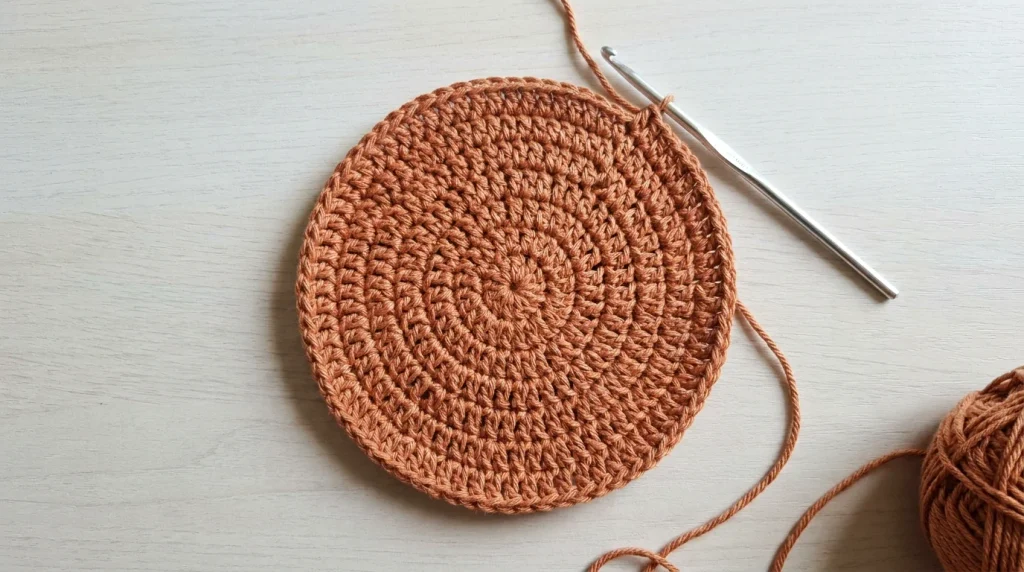
This is where moss stitch crochet earns its keep for baskets, bowls and plant pot covers. The density does structural work you’d otherwise have to plan for.
Flat circles are a different job. The stitch won’t fan outward on its own the way a double crochet circle will, so work out your increase rounds before you begin. Improvising them three rounds in tends to show.
Color Changes in Moss Stitch Crochet
Short rows, and joins that vanish inside chain spaces. Swap on the final pull-through of a row’s last single crochet, then either carry the old color up the side or cut it and weave in at the end.
Carrying up saves an absurd number of ends on a striped blanket. Don’t pull the carried strand tight, though, or the edge puckers and you’ll spend an evening undoing that as well.
Moss Stitch Crochet Troubleshooting
Widening row by row? Check the end of the row. That last single crochet belongs in the turning chain space, not beside it.
Can’t find the chain spaces at all? Nine times out of ten it’s the yarn, not the crocheter. Dark colors swallow them whole. Switch to something pale for the practice swatch and they reappear.
Cardboard texture isn’t a fault. That’s the stitch doing its job. If it bothers you, size up the hook or drop a yarn weight.
Rows leaning sideways mean you’ve mixed chain-space stitches with stitch-top stitches somewhere. Pick one and stay with it.
What to Make With Moss Stitch Crochet
Blankets, mostly, and the reasoning holds. Warm, dense, finished-looking without needing a border.
Chunky scarves come together quickly and forgive a great deal. Washcloths and coasters are the practice pieces you’ll keep using after the practice is over. Bags and plant covers lean on the firmness. Baby blankets get a flat fabric that lies evenly rather than bunching at the corners.
If the basics still feel shaky before committing to a full blanket, the crochet patterns and beginner guides at MapleHookCrochet are a reasonable place to build those skills first.
Moss Stitch Crochet Questions
Is moss stitch the same as linen stitch? Yes. Moss, linen, granite and woven stitch all describe one alternating single crochet and chain-one structure.
How many chains for a moss stitch crochet blanket? Work a swatch first. Chain an even number, do four or five rows, measure the width, then divide your target width by the swatch width and multiply by your chain count. Round to the nearest even number. Guessing from a chart tends to land you somewhere between a lap blanket and a doll’s quilt.
Do you turn your work? Only when working flat. In the round you keep going the same direction, joining each round or spiralling continuously.
Can you use chunky yarn? You can, and scarves, cowls and baskets take to it well. Use a hook big enough that the spaces stay open.
Is it beginner-friendly? As a second or third project, yes. The one skill worth acquiring is spotting a chain-one space and working into it consistently. After that it’s memorised repetition.
Does it use more yarn than other stitches? Than double crochet in the same yarn, yes, because the stitches sit closer together. Buy the extra skein on big projects rather than gamble.
Can you use moss stitch crochet for amigurumi? You can, though it’s rarely right. Firm fabric with small gaps between stitches is the opposite of what toys need.
Where to Start With Moss Stitch Crochet
One rule carries the stitch. Single crochet into the chain spaces, and let the turning chain handle the edge. Count after the first three rows, check both sides are running straight, and everything after that is repetition you can do with the television on.
A light medium-weight swatch of about 24 chains is enough to prove the edges hold. Then go and dig out the blanket you’ve been putting off.

Leave a Reply