
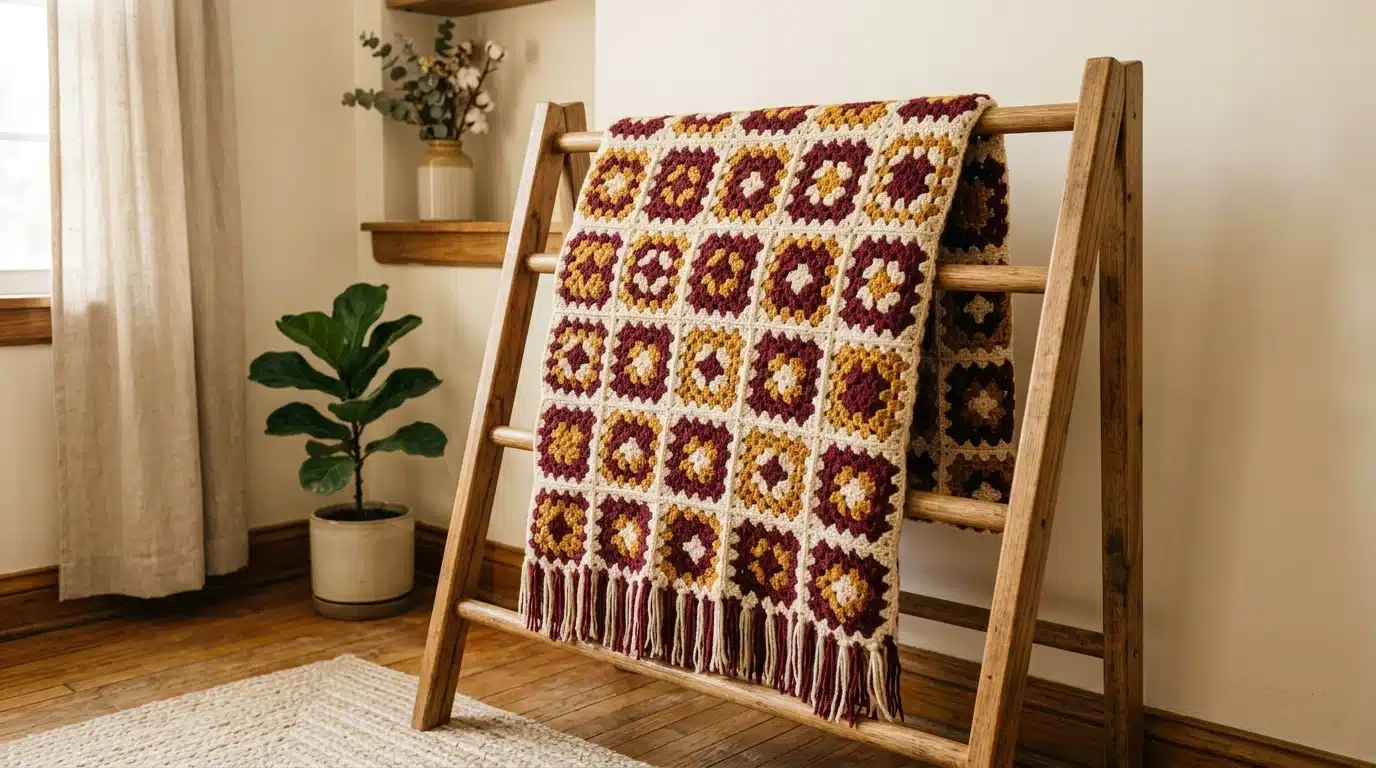
An afghan isn’t quite the same project as a basic blanket worked straight through in one continuous panel. The word specifically points to the older tradition of building a blanket from smaller repeated pieces — motifs, strips, or panels — joined together afterward, often in a mix of colors that a single-panel throw usually doesn’t attempt. Think classic granny square throws, ripple-stitch afghans, or log cabin style panels, rather than one plain rectangle worked from cast-on to bind-off.
That construction difference changes where the real difficulty sits. A single-panel blanket lives or dies on consistent tension across one long piece. An afghan crochet pattern lives or dies on the joining stage — matching motif sizes, keeping seams from puckering, and making a multi-color piece look intentional rather than mismatched. This post walks through a full afghan build, motif to finished throw, along with the sizing and color choices that separate a cohesive afghan from a pile of squares that don’t quite agree with each other.
Table of Contents
What an Easy Afghan Crochet Pattern Actually Needs?
Yarn consistency matters more here than in most other crochet projects, since an afghan usually involves dozens of individual motifs or panels made over what might be weeks or months. Buying enough yarn in each color up front, from the same dye lot, avoids a subtle color shift showing up between motifs made early and motifs made later in the same project.
Worsted weight acrylic or a wool-acrylic blend is the standard choice for afghans specifically, mostly because these fibers hold up to the frequent washing a blanket gets, and acrylic in particular resists the dye-lot variation that can plague natural fibers across a long project.
Gauge matters differently for an afghan than for a garment. You’re not fitting a body, so a slightly loose or tight gauge doesn’t ruin the piece the way it would a sweater — but every single motif needs to come out the same size as every other motif, which means locking in one consistent gauge before you make dozens of them, not adjusting halfway through.
Hook size follows the yarn weight as usual. What matters more here is sticking with that exact hook for the entire project — swapping hooks partway through, even by half a size, is one of the more common reasons motifs stop matching each other in a long afghan crochet pattern.
Afghan Crochet Pattern Ideas: Three Classic Approaches
Most afghan patterns fall into one of a few well-established traditions, each with a genuinely different construction process.
Granny square afghans join individual square motifs, usually worked from the center outward in rounds, into a grid. This is the most beginner-accessible entry point, since each square is small, quick to finish, and any single square with a mistake can be reworked without touching the rest of the project.
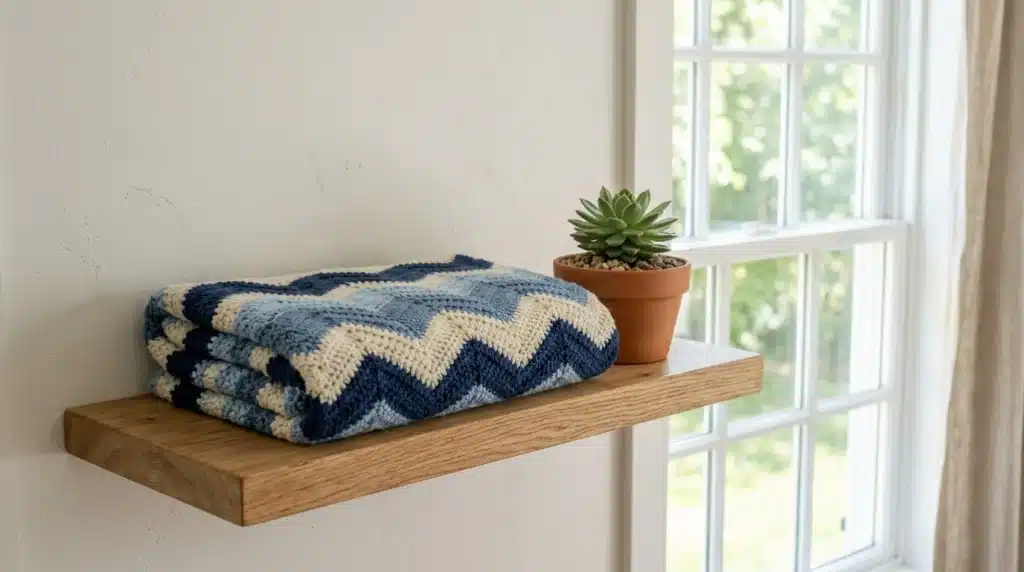
Ripple or chevron afghans are worked in continuous rows across the full width of the blanket, with a repeating zigzag stitch pattern created through evenly spaced increases and decreases along each row. There’s no separate joining stage here, which some people prefer, but keeping the increase and decrease points exactly aligned row after row takes more sustained attention than a motif-based build.
Panel or strip afghans, sometimes called log cabin or strip-style afghans, build the blanket from several long rectangular strips worked separately, then joined side by side once each strip reaches full length. This sits between the other two in difficulty — fewer individual pieces to track than a full grid of granny squares, but more length to manage per piece than a single motif.
For a first afghan crochet pattern, granny squares remain the easiest entry point specifically because mistakes stay contained to one small, quick-to-redo piece rather than a long row or strip.
Sizing Guide for an Afghan Crochet Pattern
Afghan sizing follows a few standard categories, similar to how bedding is sized, though there’s more flexibility here than with a fitted garment since the piece just needs to cover rather than fit a body.
| Size | Approximate Dimensions | Typical Use |
|---|---|---|
| Lapghan | 36 x 48 in | Lap blanket, chair throw |
| Throw | 50 x 60 in | Couch throw, single-person cover |
| Twin | 66 x 90 in | Twin bed topper |
| Queen/Full | 90 x 90 in | Larger bed topper, family blanket |
Because an afghan is built from repeated units — motifs, rows, or strips — scaling up simply means making more of the same unit rather than recalculating shaping the way a garment would require. That’s a genuinely forgiving trait of afghan construction: deciding partway through that you want a bigger throw just means crocheting a few more squares or a few more rows.
How to Make an Afghan Crochet Pattern: Step-by-Step Construction?
This walks through a granny square build, since it’s the friendlier entry point for a first afghan. Exact stitch counts per motif vary by the specific granny square variation you choose, so the steps below focus on the overall process rather than a single fixed square pattern.
Step 1: Swatch and lock in your gauge. Make one full motif first, measure it, and decide whether that size works for your target afghan dimensions before committing to dozens more at the same gauge.
Step 2: Calculate your motif count. Divide your target afghan width and length by your swatch motif’s finished size to get a rough grid — for example, a 48-inch-wide lapghan made from 6-inch squares needs roughly 8 squares across.
Step 3: Make all your motifs. Work through your full motif count using the same hook and consistent tension throughout. Keeping motifs in a labeled bag or box by color as you go makes the layout stage much faster later.
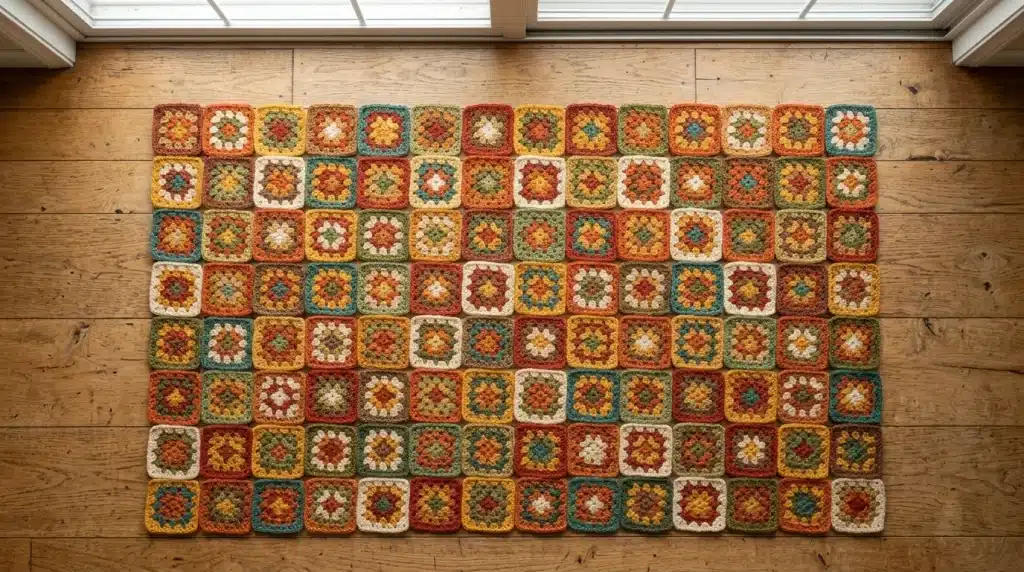
Step 4: Lay out your color arrangement before joining anything. Spread all finished motifs out in their final grid pattern on a large flat surface, and adjust the color placement until it looks balanced, before you commit to joining anything permanently.
Step 5: Join the motifs. Whip stitch, single crochet, or a join-as-you-go method worked during the final round of each square are the three common joining approaches. Whichever you choose, join in one consistent direction and method across the whole piece rather than mixing methods, which tends to create uneven seam texture.
Step 6: Add a border. A few rounds of single crochet or a simple shell stitch worked around the entire joined piece ties the whole afghan together visually and reinforces the outer edge, which otherwise takes the most wear over the blanket’s lifetime.
Common Problems in an Afghan Crochet Pattern, and Real Fixes
Motifs come out slightly different sizes from each other. This almost always traces back to a hook or tension change partway through a long project. Keep a labeled note of your exact hook size, and if you notice drift, re-measure a few older motifs against a fresh one before assuming the whole batch is fine.
The joined afghan has a wavy or rippled edge. This usually means motifs were stretched slightly to fit together during joining, rather than actually being the same size. Blocking each motif to a consistent measurement before joining catches size differences early, while they’re still easy to fix one square at a time.
Seams look bulky or uneven once joined. Mixing joining methods across the same project is the most common cause. Pick one method — whip stitch is the least bulky for most yarn weights — and stick with it for the entire afghan.
The color arrangement looks random instead of intentional. This comes from joining motifs in the order they were finished rather than planning the layout first. Always lay every motif out in its final grid and adjust the arrangement before joining, even if that means temporarily pausing a project you’re eager to finish.
Ripple or chevron rows drift out of alignment over many rows. The increase and decrease points weren’t marked or counted consistently. Placing a stitch marker at each shaping point for the first several rows, until the rhythm becomes automatic, prevents this drift from compounding over a large blanket.
Afghan Crochet Pattern Tips for Choosing a Color Palette
Limiting a granny square afghan to three or four colors total, repeated in a planned rotation across the squares, reads as far more intentional than using a different color combination in every single motif, even though the second approach is tempting when using up scrap yarn.
A single unifying border color, worked around the entire finished piece regardless of what colors appear inside it, does a lot of visual work to tie a busy, multi-color afghan together into something that reads as one cohesive design rather than a collection of separate squares.
For ripple or chevron patterns specifically, alternating just two or three colors in a consistent striping sequence tends to showcase the zigzag stitch pattern itself more clearly than a dense, high-contrast multi-color approach would.
Faqs
Is a granny square afghan really easier than a single-panel blanket for a first big project?
For most beginners, yes, mainly because mistakes stay contained to one small square rather than an entire long panel. The tradeoff is the joining stage at the end, which a single-panel blanket doesn’t require at all.
Can I mix yarn weights within the same afghan?
Not without noticeable size differences between motifs or rows made in each weight. Stick to one yarn weight throughout a single project, even if you’re combining different colors or brands within that weight.
How much yarn does a typical afghan actually need?
This varies enormously by size, motif style, and yarn weight, so there’s no single reliable figure to hand over without those specifics. Weighing one completed motif and multiplying by your total planned motif count gives a far more accurate estimate than any generic number.
Can I turn a granny square afghan pattern into a ripple pattern instead partway through?
Not practically, since the two use entirely different construction methods from the very first row. It’s better to decide which style you’re building before starting, rather than trying to convert mid-project.
What’s the easiest way to keep track of a large afghan crochet pattern’s progress over a long-term project?
A simple written or photographed grid, marking off which squares or rows are finished, works better than trying to track progress from memory alone, especially on a project that might stretch across several months.

Leave a Reply