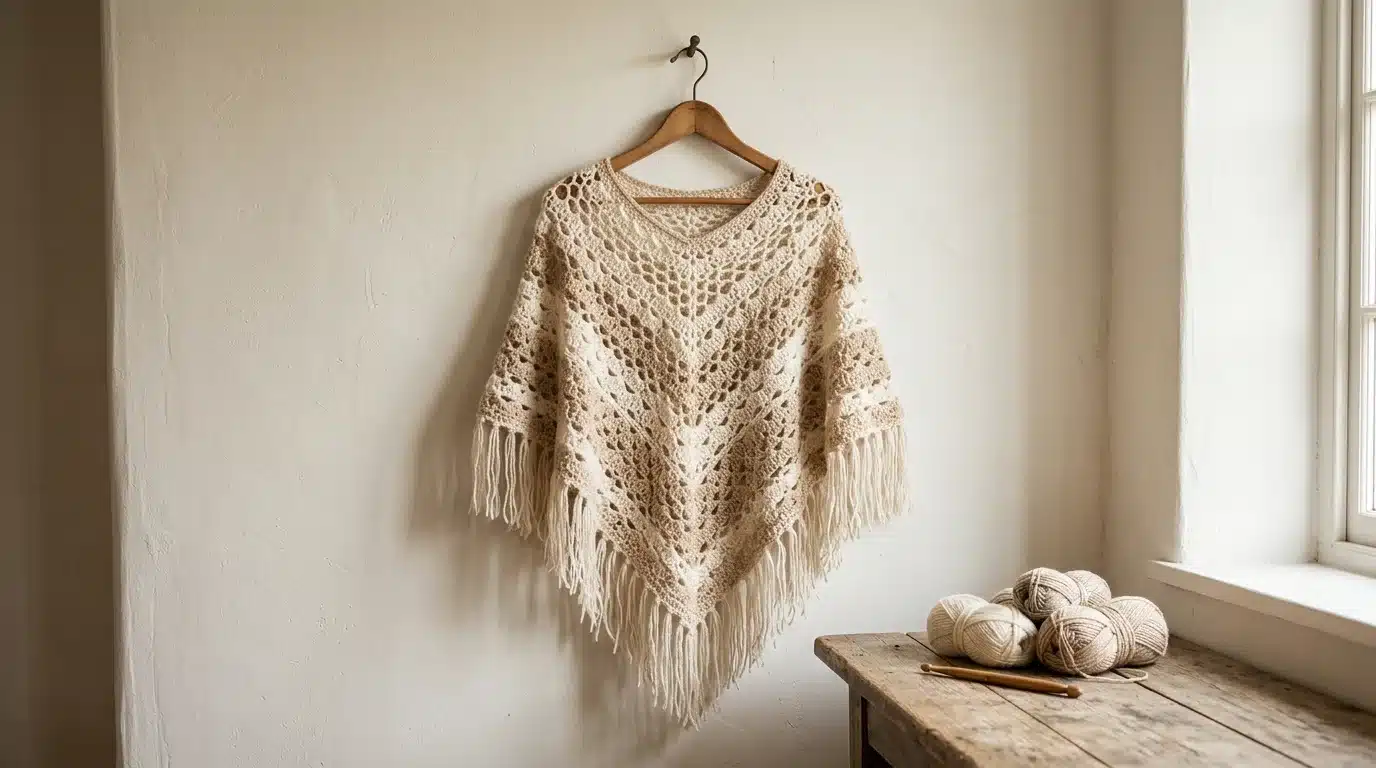
A crochet poncho is a useful project when you want something comfortable to wear without making a fitted sweater. Most styles offer plenty of room for movement, and many are built from simple shapes that don’t require complicated garment shaping. Depending on the design, you can make a lightweight layer for spring or a warm poncho for chilly days.
These free crochet poncho patterns include classic two-panel designs, colourful granny-style ponchos, textured wraps, and options for babies. Some are suitable for beginners, while others are better if you’ve already worked with different stitches and shaping techniques.
If you’re new to wearable crochet, start with a design that uses basic stitches and clearly explained measurements. Once you’re comfortable with the construction, you can experiment with colour changes, collars, fringe, and different yarn weights.
Table of Contents
9 Free Crochet Poncho Patterns to Try
1. Simple Two-Panel Crochet Poncho
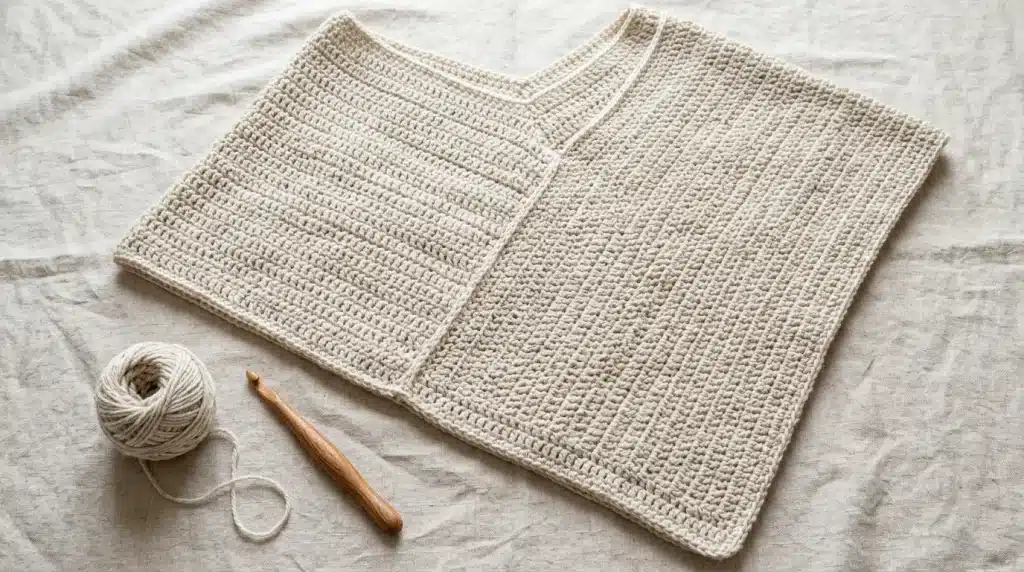
A two-panel poncho is a practical starting point if you want to make a wearable without complicated shaping. The basic idea is to crochet two rectangular panels, then join them to create the body and neckline.
You can use single crochet for a dense fabric or double crochet for a more open, flexible finish. Choose a yarn that feels comfortable against your skin, especially if you plan to wear the poncho directly over a shirt.
What makes this style useful:
- Straightforward panel construction
- Easy to adjust the length
- Suitable for experimenting with different colours
- No complicated sleeve shaping
For a published example of a two-panel design, take a look at Yarnspirations’ Red Heart Perfect Poncho pattern. The design uses two panels, and the pattern provides multiple size options.
2. Beginner-Friendly Patons Poncho
If you want to practise shaping while making your first poncho, the Free Beginner Patons Poncho pattern is worth considering.
This design uses Patons Shetland Chunky yarn and includes double crochet and half double crochet stitches. It offers an opportunity to practise working with different stitch heights while following a dedicated garment pattern.
Before starting, check the pattern’s current yarn information, sizing, and availability. A gauge swatch is particularly helpful for a wearable project because differences in tension can affect the finished fit.
Best for: Crocheters who know the basic stitches and want to practise garment shaping.
3. Granny-Style Color Block Poncho
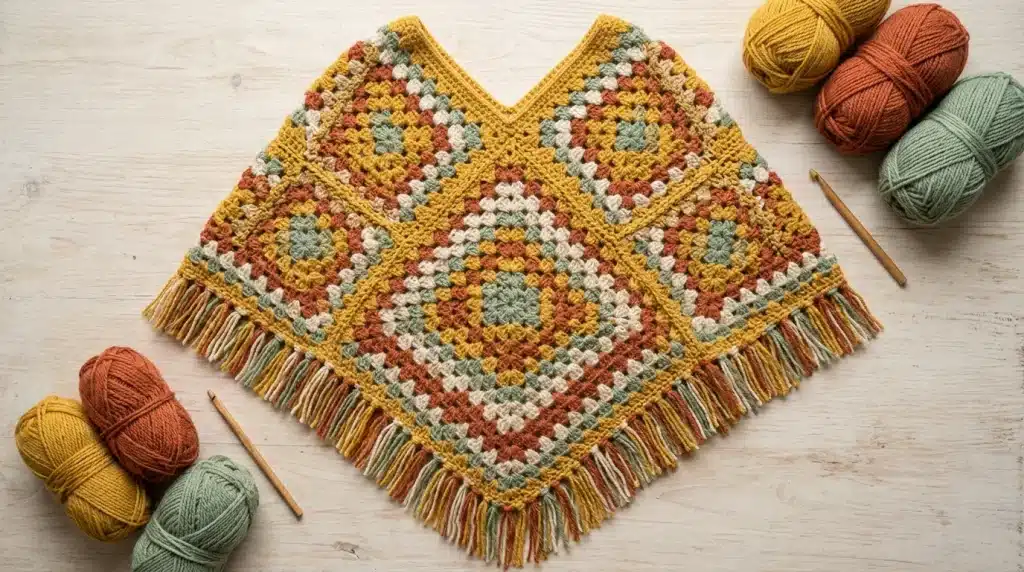
Granny-style crochet is a good option if you enjoy combining colours and seeing the pattern develop as you work. A colour-block poncho can bring together several shades without requiring complicated stitch designs.
The Caron Mitered Granny Color Block Poncho from Yarnspirations is a published free pattern listed at beginner level. Its colourful design makes it a useful choice for anyone who wants a poncho with more visual interest.
When choosing colours, try selecting one main shade and two complementary colours. This keeps the finished piece coordinated without making the colour changes feel random.
Best for: Beginners who enjoy colourful projects and crocheters looking to use leftover yarn in a coordinated design.
4. Easy Hi-Low Crochet Poncho
A hi-low poncho has an uneven hem, with one side or section hanging lower than another. This gives the garment a different silhouette from a traditional poncho with an even hemline.
The Caron Hi Low Poncho pattern is an option to explore. Yarnspirations lists it as an easy crochet pattern with several size ranges.
When making a hi-low design, pay attention to the finished measurements rather than judging the length from the photograph alone. The front and back lengths can change the overall look considerably.
Best for: Crocheters who want a more modern shape without moving to a highly textured stitch pattern.
5. Patons Sand & Ocean Poncho
For a poncho with a more traditional, cosy appearance, consider the Patons Sand & Ocean Poncho.
This published pattern is worked from side to side in one piece, with a collar added at the end. It uses Patons Classic Wool Worsted yarn and is listed at an easy skill level.
The side-to-side construction offers a different experience from making two separate rectangles. Read the shaping instructions before starting so you know how the garment is formed and where the collar fits into the process.
Best for: Crocheters who want to try a side-to-side construction and make a warmer poncho.
6. Simple Crochet Baby Poncho
A baby poncho can make a lovely handmade gift, especially when you choose a soft yarn and a comfortable design. Since babies grow quickly, checking the finished measurements is more useful than relying on age alone.
The Bernat Simple Baby Poncho pattern is listed as a beginner pattern and uses Bernat Baby Blanket Tiny yarn.
Choose a yarn that can be cared for easily, and follow its washing instructions. For baby garments, avoid loose decorative pieces and make sure any fastenings or embellishments are securely attached and appropriate for the child’s age.
Best for: Beginners looking for a small wearable project or a handmade baby gift.
7. Red Heart Poncho and Hat Set
If you want to make a matching accessory, the Red Heart Poncho & Hat pattern includes both pieces in one project.
The poncho is described as lightweight yet warm, making this set worth considering for cooler weather. Having a matching hat also gives you a chance to practise coordinating the same yarn and colours across two projects.
Before beginning, review the complete pattern for the hat and poncho, including the finished measurements and any special construction instructions.
Best for: Crocheters who enjoy coordinated accessories and want more than one item from a project.
8. Patons Free Crochet Cape or Poncho
A cape-style poncho is another option if you prefer a garment with a more defined neckline and a little extra structure.
The Patons Sand & Ocean Poncho is one published example to consider. Its one-piece, side-to-side construction and added collar give it a different look from a simple pair of joined rectangles.
When choosing a cape-style design, check the neckline instructions carefully. The opening needs to be comfortable to pull over the head while still sitting well on the shoulders.
Best for: Crocheters who prefer a collar and a more structured finish.
9. Lion Brand Pero Poncho
If you prefer a simple shape with a chunky texture, the Lion Brand Pero Poncho is another beginner-level pattern to explore.
The pattern uses bulky-weight yarn and half double crochet stitches. Lion Brand lists a gauge of 10 half double crochet stitches and 10 rows over approximately 4 inches, so making a gauge swatch is important before beginning.
Bulky yarn can help a project grow more quickly than lighter yarn, although the actual working time will depend on your pace and the finished dimensions.
Best for: Beginners who prefer a thicker fabric and want to practise half double crochet.
How to Choose the Best Free Crochet Poncho Pattern?
With so many crochet poncho patterns available, the best choice depends on your experience, the yarn you have, and the kind of garment you want to wear.
Consider Your Skill Level
If this is your first wearable, choose a pattern with basic stitches and clear instructions. Rectangular panels and simple construction can be easier to understand than a design with extensive shaping.
More experienced crocheters may prefer colourwork, unusual silhouettes, collars, or textured stitch patterns.
Choose the Right Yarn
The yarn affects the weight, drape, warmth, and overall appearance of your poncho.
- Lightweight yarn: Useful for airy ponchos and warmer weather.
- Medium-weight yarn: A versatile choice for everyday garments.
- Bulky yarn: Suitable for thicker, cosy ponchos that can work up quickly.
Always check the yarn requirements in the specific pattern. If you substitute a different yarn, make a gauge swatch and confirm that the finished fabric drapes the way you want.
Check the Sizing Instructions
Ponchos often have a relaxed fit, but that doesn’t mean every size will fit everyone in the same way.
Look at the finished width and length, as well as the neckline measurement. If you’re making a poncho as a gift, check the recipient’s preferred length and how they intend to wear it.
Think About the Season
For spring and summer, a lighter yarn and an open stitch pattern may be more comfortable. For autumn and winter, a warmer yarn and denser fabric can provide more coverage.
The weight of the yarn isn’t the only factor. Stitch density, garment length, and the number of layers also affect how warm the finished poncho feels.
How to Make a Simple Crochet Poncho
If you want to understand the basic construction before choosing a detailed pattern, a two-panel poncho is a useful example. The following overview explains the process rather than providing tested stitch counts for a specific finished garment.
Materials
- Yarn suitable for your chosen design
- Crochet hook recommended for the yarn
- Scissors
- Yarn needle
- Measuring tape
- Stitch markers, if needed
Step 1: Take Your Measurements
Measure the width and length you want for the poncho. Consider how much coverage you want across the shoulders and how far down the body the garment should fall.
Also check the neckline opening. It should be comfortable to wear and large enough to pull over your head.
Step 2: Make a Gauge Swatch
Work a small sample using the stitch pattern you intend to use. Measure the number of stitches and rows within a set area.
Your gauge helps you estimate the starting chain and the number of rows needed for each panel. Follow the measurements and stitch counts in your chosen pattern rather than applying one set of numbers to every yarn.
Step 3: Crochet the Panels
For a simple two-panel design, make two pieces according to the pattern’s dimensions. Depending on the design, these may be rectangles or slightly shaped pieces.
Keep the stitch count consistent and measure both panels as you work. If the pieces differ significantly in size, check your tension before joining them.
Step 4: Join the Pieces
Arrange the panels according to the pattern instructions and join the required edges using a yarn needle or crochet seam.
Leave the neckline opening as directed. Before securing every seam, lay the poncho flat and check that the pieces are aligned correctly.
Step 5: Finish the Edges
Add the recommended border, collar, or fringe if the design includes one. If you’re creating your own variation, a simple row of single crochet can give an edge a more finished appearance.
Try on the poncho before weaving in all the loose ends. Check the neckline, shoulder coverage, and overall length.
Crochet Poncho Pattern Tips for a Better Finish
1. Make a Gauge Swatch
A gauge swatch helps you estimate the finished dimensions before committing to the full project. This is particularly useful when using a different yarn from the one specified in the pattern.
2. Keep Your Stitch Count Consistent
Dropped or added stitches can make panels wider or narrower than intended. Count your stitches at regular intervals, especially when working with a repeating stitch pattern.
3. Check the Drape
The fabric should hang comfortably instead of feeling too stiff or heavy. If your poncho feels rigid, review the yarn choice, hook size, and stitch density before continuing.
4. Measure Both Panels
If your design uses two panels, compare their width and length before joining them. Small differences can become more noticeable once the garment is assembled.
5. Plan Colour Changes in Advance
For a striped or colour-block poncho, decide where each colour should begin and end. This helps you avoid awkward colour changes and gives the finished garment a more balanced appearance.
6. Finish the Neckline Carefully
The neckline affects both comfort and appearance. Follow the pattern’s instructions for joining and shaping, and try the poncho on before completing the final edging.
7. Follow the Yarn Care Instructions
Check the yarn label before washing your finished poncho. Some fibres can be machine-washed, while others need gentle hand-washing or flat drying.
Easy Free Crochet Poncho Pattern Ideas
Once you’re comfortable with basic construction, there are several ways to personalise your next project.
Striped poncho: Alternate two or three colours to create a simple striped effect. This can be a useful way to use yarn from your existing stash.
Fringed poncho: Add fringe along the lower edge for a relaxed finish. Keep the strands even and secure them properly.
Hooded poncho: Choose a pattern that includes a hood or provides instructions for adding one. A hood changes the construction and adds weight, so follow a design that accounts for it.
Textured poncho: Try a stitch pattern with a raised or ribbed appearance. Make a gauge swatch because textured stitches can affect the dimensions and drape.
Lightweight summer poncho: Choose a suitable lightweight yarn and an open stitch pattern for a less dense fabric.
Oversized poncho: Increase the width or length according to your measurements and the pattern’s construction. Check the neckline and shoulder fit before making substantial changes.
Common Mistakes to Avoid
Choosing Yarn Without Checking the Pattern
A yarn substitution can change the size and drape of your poncho. Check the yarn weight, gauge, and recommended hook before starting.
Skipping the Gauge Swatch
Without a gauge check, your finished garment may be wider, narrower, longer, or shorter than expected. A small sample can help you spot these differences early.
Making the Neckline Too Small
A narrow neckline can make the poncho difficult to put on or uncomfortable around the neck. Follow the pattern measurements and check the opening before finishing.
Joining Uneven Panels
Panels of different sizes can cause the garment to hang unevenly. Measure them before joining and correct any major differences.
Adding Too Much Fringe or Heavy Decoration
Extra decoration can weigh down a lightweight poncho. Consider how the yarn and fabric will support the added weight before attaching embellishments.
FAQs
Are Free Crochet Poncho Patterns Suitable for Beginners?
Yes. Many patterns use basic stitches and simple shapes, making them a reasonable starting point for beginners. Choose a design with clear instructions, check the gauge, and make sure you understand the construction before beginning.
What Is the Easiest Way to Crochet a Poncho?
A simple two-panel design is one of the easiest approaches to understand. You crochet two pieces, join them according to the instructions, and finish the edges. The exact construction varies by pattern.
How Much Yarn Do I Need for a Crochet Poncho?
The amount depends on the size, length, stitch pattern, yarn weight, and design. Check the yarn requirements in your chosen pattern and consider purchasing enough yarn from the same dye lot to avoid noticeable colour differences.
Can I Make a Crochet Poncho Without Sewing?
Some ponchos are worked in one piece or constructed in the round, reducing or avoiding traditional seaming. Check the construction notes before choosing a pattern if you prefer not to sew pieces together.
Which Crochet Stitches Work Well for Ponchos?
Single crochet, half double crochet, and double crochet are common choices. Granny-style stitches and open mesh patterns can also work well, depending on the desired texture and drape.
Can I Adjust the Length of a Crochet Poncho?
Often, yes, but it depends on the construction. Check the pattern’s measurements and stitch repeat before adding rows or rounds. Increasing the length may also increase yarn requirements and affect the overall proportions.
Are Crochet Ponchos Suitable for Summer?
Yes. A lightweight yarn and a more open stitch pattern can create a breathable layer for cooler summer evenings or air-conditioned spaces. Avoid choosing a dense, heavy fabric if you want a lighter garment.

Leave a Reply