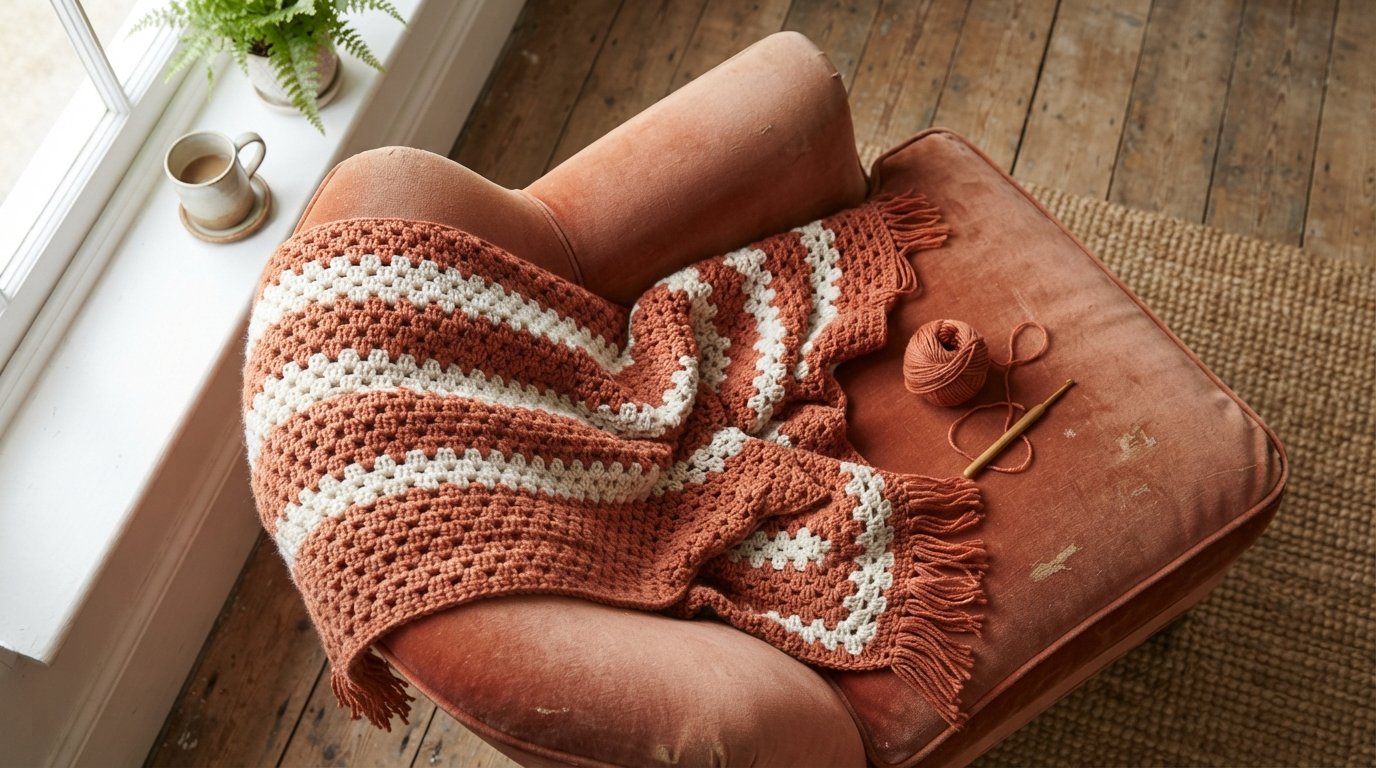
A crochet lap blanket pattern is one of the most realistic first-blanket projects, mostly because the size is forgiving in a way a full bed blanket isn’t. A lap blanket only needs to cover someone seated in a chair, so the total stitch count stays manageable even for someone still building speed and consistency with basic stitches.
This kind of project sits in the same broad category as the afghan — a term that historically referred to a knitted or crocheted blanket, usually worked in geometric or striped sections. A lap blanket is essentially a smaller-scale version of that same tradition, sized for a chair or a couch rather than a bed.
Below is one complete crochet lap blanket pattern, built from standard double crochet rows rather than a single designer’s copyrighted design, so you’re free to adjust the size, stitch, or color scheme freely.
Table of Contents
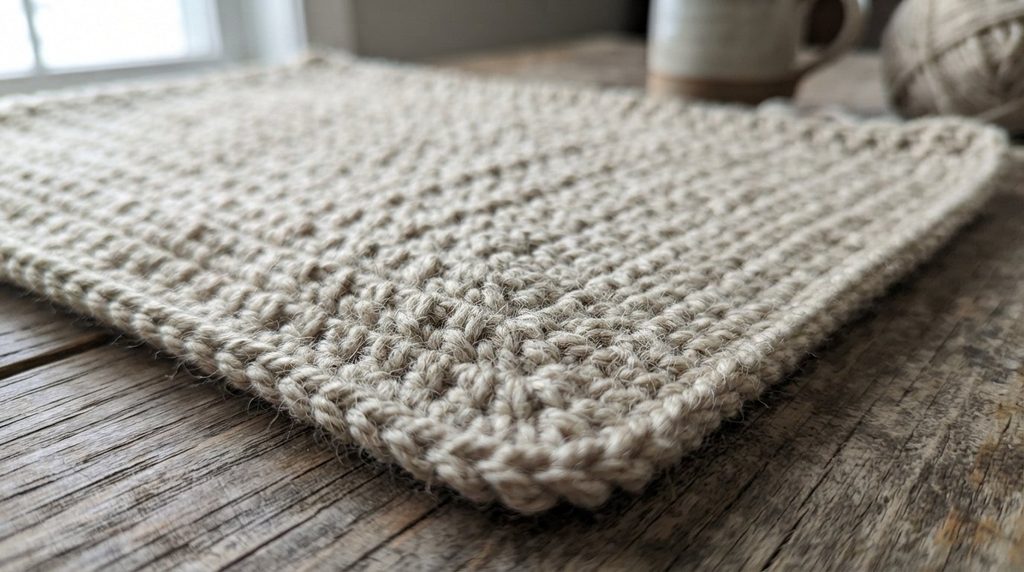
Why a crochet lap blanket pattern makes a good starting project?
Three things make this size range realistic for a first blanket where a bed-sized throw often isn’t: the total row count is short enough to finish in days rather than weeks, tension inconsistencies are less noticeable across a smaller piece, and the yarn investment is low enough that trying a stitch pattern you’re unsure about doesn’t feel like a major commitment if it doesn’t turn out the way you pictured.
Materials and gauge
Yarn: Worsted weight (#4), approximately 1,000–1,200 yards for a standard lap-blanket size
Hook: 5.5–6 mm (I–J)
Notions: Yarn needle for weaving in ends
Gauge: 12 stitches and 8 rows in double crochet = 4 inches square
Gauge matters less for a crochet lap blanket pattern than it would for a fitted garment, since the finished size just needs to be roughly right rather than precise — but it’s still worth swatching briefly to get a sense of how much yarn your particular tension will use before committing to the full project.
The pattern
Foundation row: Chain a multiple of your desired width — a standard lap blanket runs about 36 inches wide, which works out to roughly 110–120 chains at this gauge, adjusted to your own tension. Work double crochet in the third chain from the hook and across.
Body rows: Chain 3 (counts as first dc), turn, and work double crochet across every row after the foundation. Continue until the piece measures about 48 inches long — a standard lap blanket length that covers from the waist to past the knees when seated — then fasten off.
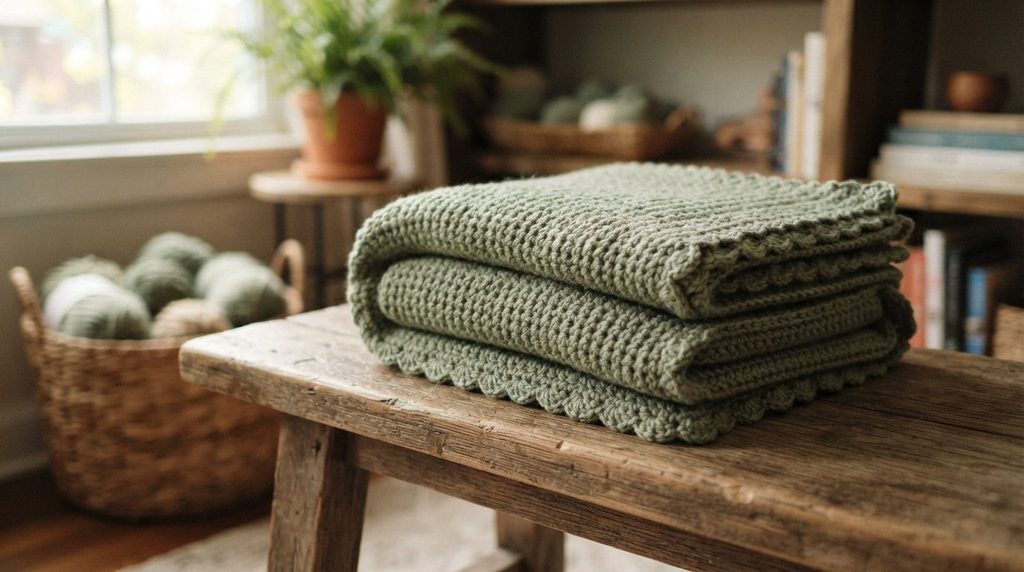
Border: Work 2–3 rounds of single crochet around all four sides to keep the edges from curling and give the finished piece a clean, defined edge. Work 3 single crochet into each corner stitch to keep the border lying flat rather than puckering at the corners.
That’s the entire structure of the plainest version of this crochet lap blanket pattern — one repeated row of double crochet, followed by a simple border. Everything else below is a variation on that same basic shape.
Stitch pattern variations
The plain double crochet version above is the fastest to work, but a few simple substitutions change the look substantially without changing the basic row structure:
- Granny stripe: Replace plain double crochet rows with groups of 3 dc separated by chain-1 spaces, switching colors every 1–2 rows. This is the classic textured, striped look most people picture with a handmade throw.
- Shell stitch: Work shell repeats (5 dc into one stitch, skip 2, single crochet, skip 2, repeat) instead of plain rows for a scalloped, textured surface.
- Basic ripple: Alternate increases and decreases at set points across each row to create a wave pattern, which reads as more advanced than it actually is once the repeat is established.
Any of these substitutes cleanly into the same foundation-row-and-border structure described above, since the total row count and finished size stay roughly the same regardless of which stitch fills them.
Choosing colors and yarn for this project
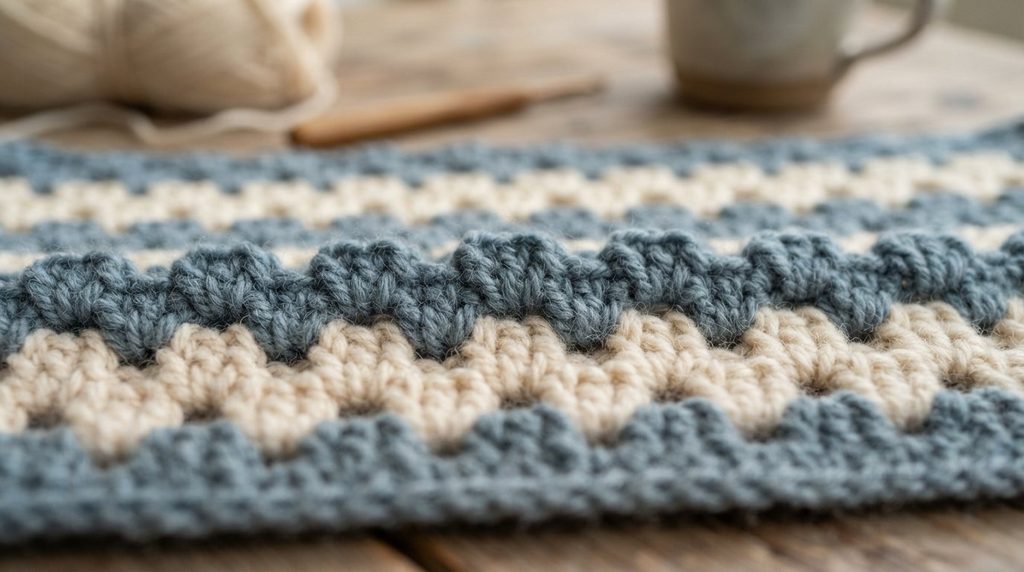
A solid color shows off stitch texture most clearly, which matters more for the shell and ripple variations than the plain double crochet or granny stripe versions, since their visual interest comes largely from color changes rather than surface texture. Variegated yarn is a reasonable shortcut if you want visual interest without tracking multiple skeins — the color shifts happen automatically within a single ball, so a plain double crochet crochet lap blanket pattern worked in variegated yarn can look nearly as dynamic as a deliberately striped one, with far less planning involved.
Fiber choice affects how the finished piece feels as much as how it looks. Acrylic is the most practical everyday choice for a blanket that gets washed often, since it’s machine washable and holds up well to repeated use. A wool or wool-blend yarn produces a warmer, slightly heavier drape but typically needs hand washing. Cotton makes a cooler, less insulating blanket that suits warmer climates or a decorative throw better than a true cold-weather lap blanket.
Sizing this crochet lap blanket pattern up or down
The 36×48 inch dimensions above are a standard lap-blanket size, but this project scales easily in either direction. For a smaller throw meant for a single armchair, 30×40 inches uses proportionally less yarn and finishes faster for this crochet lap blanket pattern. For a couch-sized blanket that covers two people, scaling up to 50×60 inches is really just working the same pattern longer — the row structure doesn’t change, only the total count of rows and the starting chain length.
Common mistakes to avoid
Uneven turning chains are the most frequent issue with a project this size, since a slightly looser or tighter chain-3 at the start of each row compounds over dozens of rows into a noticeably wavy edge. Counting the total stitch count every several rows, rather than only when the edge already looks uneven, catches this early enough to fix.
Running out of yarn partway through is the second common issue, particularly when switching to a stitch pattern like shells or granny stripes that use more yarn per row than plain double crochet. Weighing your yarn before starting and doing a rough calculation based on a swatch avoids discovering you’re a skein short halfway through the last few rows.
Skipping the border is a smaller but common oversight — without it, the outer rows of a plain double-crochet crochet lap blanket pattern tend to curl slightly at the edges over time, which the single crochet border corrects by adding a firmer, denser edge than the open double crochet stitches alone provide.
Starting with too tight a foundation chain is a final common issue, especially for anyone newer to crochet — a chain worked more tightly than the rest of the piece pulls the bottom edge of the crochet lap blanket pattern in slightly, creating a subtle hourglass shape rather than a true rectangle. Working the foundation chain with a slightly larger hook than the rest of the pattern, then switching down for the body rows, is a common fix if this has been an issue in past projects.
Caring for a finished lap blanket
Most worsted-weight acrylic yarns used for this kind of project are machine washable on a gentle cycle, though wool or wool-blend versions typically need hand washing to avoid felting. Laying the blanket flat to dry, rather than using a dryer, helps it keep its shape and prevents the border from stretching out of proportion with the body of the blanket. A finished crochet lap blanket pattern in acrylic can generally go straight into a normal wash cycle alongside other laundry, which is part of why acrylic remains the most practical choice for a blanket that will actually see regular use rather than sitting purely decorative.
FAQs
How long does a crochet lap blanket pattern like this take to finish?
For someone comfortable with basic stitches, the plain double-crochet version is realistically a one-week project working an hour or so most evenings, though a more textured stitch pattern like shells or granny stripe takes noticeably longer per row.
Can I make a crochet lap blanket pattern with leftover yarn from other projects?
Yes — this size is genuinely well suited to stash yarn, particularly the granny stripe variation of this crochet lap blanket pattern, since color changes every row or two make it easy to use up partial skeins without needing to match dye lots exactly.
What’s the difference between a lap blanket and a full-sized throw?
Mainly dimensions — a lap blanket is sized to cover someone seated in a chair, typically 36×48 inches or smaller, while a throw usually runs closer to 50×60 inches and is meant to cover more of a couch or a person lying down.
Does a crochet lap blanket pattern need blocking?
It’s optional for this project, unlike a lace shawl where blocking is closer to essential, but a light blocking does help even out any minor tension differences across the piece and gives the border a crisper, flatter finish.
Can I add a fringe to a crochet lap blanket pattern?
Yes — a simple knotted fringe along the two shorter edges is a common finishing touch. Cut yarn lengths roughly twice the desired fringe length, fold in half, pull the folded loop through a border stitch, and pull the tail ends through that loop to secure it, repeating evenly along the edge.
Is a crochet lap blanket pattern a good gift project?
It tends to work well as a gift specifically because the size keeps a crochet lap blanket pattern achievable on a deadline — a full bed-sized throw can take months, while a lap blanket is realistic to finish in time for a birthday or holiday even if you start with only a few weeks of lead time.

Leave a Reply