
Crochet vest designs cover a lot more ground than most people expect once they start looking past the basic solid-panel version. The same core garment shape — sleeveless, open or lightly closed at the front, worn as a layering piece — can carry a dozen different looks depending on the stitch, the color approach, and the construction method behind it. That range is exactly why crochet vest designs keep showing up as a repeat project for a lot of crocheters, long after their first plain vest is finished.
Part of what makes this category so worth exploring is how little the underlying construction actually changes between styles. Once you understand the basic front panel, back panel, and joining logic behind a vest, nearly every design covered here is a variation on that same skeleton, not a completely different build from scratch. That’s good news if you’re trying to decide which crochet vest designs to attempt next, since your existing skills carry over more than you might expect.
This roundup walks through nine crochet vest designs worth knowing, what sets each one apart technically, and roughly where each sits on the difficulty scale. Think of it as a map of the style space rather than a single pattern — a place to figure out which direction to take your next vest before you commit to yarn and a hook.
Table of Contents

1. The Classic Granny Square Vest
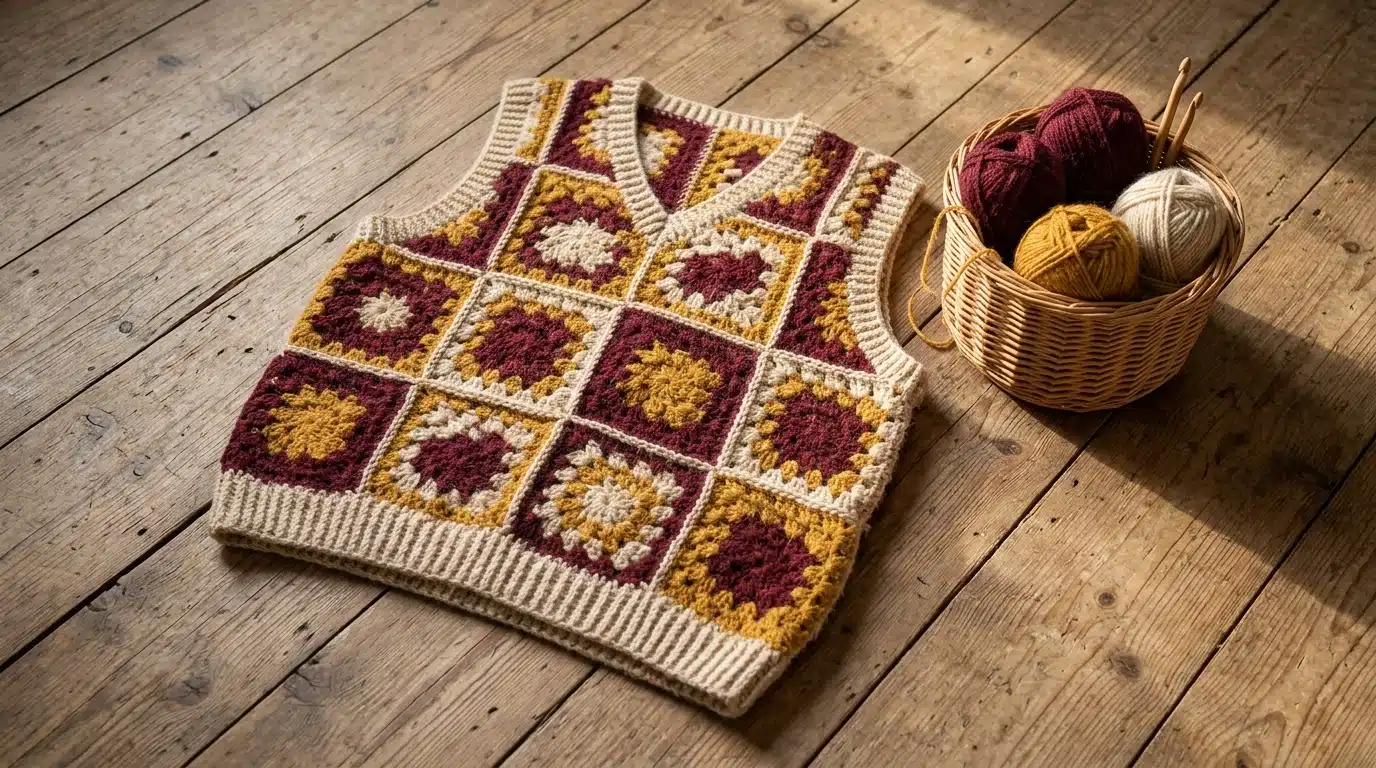
This is probably the most recognizable of all crochet vest designs, built from individual square motifs joined into front and back panels. Each square is small and quick, which makes this one of the more forgiving entries on this list — a mistake in one square stays contained rather than throwing off a whole panel.
Color arrangement does most of the visual work here. Sticking to two or three colors repeated in a planned rotation tends to look far more intentional than a different combination in every square, even though scrap-yarn versions using dozens of colors have their own charm if that’s the look you’re after.
2. The Open-Front Boho Vest
Long, flowing, and usually worked in an open, airy stitch, this style leans into the free-spirited aesthetic associated with Bohemian style fashion more broadly. A looser gauge and a drapier yarn matter more here than in almost any other vest design, since the whole look depends on movement rather than structure.
Fringe or tassels added along the hem are common finishing touches for this style specifically, reinforcing the flowing, unstructured feel that separates it from the more fitted or graphic designs elsewhere on this list.

3. The Ribbed Panel Vest
Worked in front-post and back-post stitches to create a knit-look rib running the length of the body, this design trades the flat, plain look of a basic panel vest for real texture. Among crochet vest designs aimed at an intermediate skill level, this one is a reasonable next step once basic construction feels comfortable.
4. The Color-Block Vest
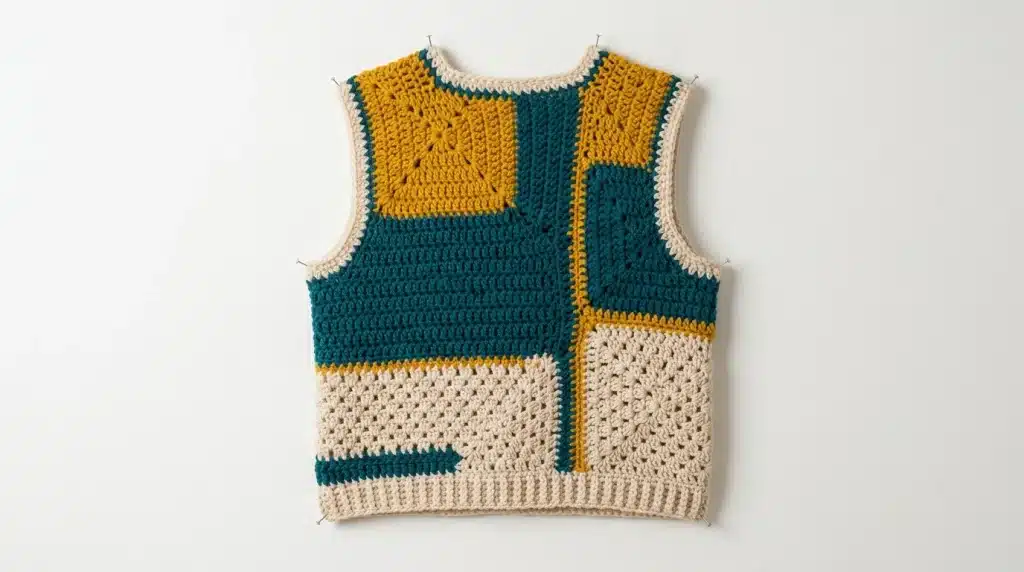
Large solid panels in contrasting colors, joined rather than blended, give this style a bold, graphic look distinct from a granny square’s smaller, repeated color pattern. The approach borrows directly from color-blocking as a broader design principle — pairing solid, contrasting sections rather than mixing colors within the same panel.
5. The Textured Shell-Stitch Vest
Shell stitch adds a scalloped, dimensional surface that reads as more finished than plain single or double crochet, without needing any color changes to carry the visual interest. This is a good design to try once you’re comfortable with basic stitches but want texture without taking on a full cable or filet pattern.
6. The Chevron or Ripple Vest
Built from the same increase-and-decrease zigzag logic used in ripple afghans, this design brings a bold, graphic stripe pattern into a wearable piece. Getting the increase and decrease points to line up across both front and back panels takes more attention than most other crochet vest designs on this list, which puts it solidly in intermediate territory.
Stitch markers at each shaping point, at least for the first several rows, help keep the zigzag rhythm consistent until it becomes automatic — a small habit that saves a lot of frustration on a piece this size.
7. The Longline Duster Vest
Rather than stopping at the hip, this design extends the body length well past it, sometimes to the knee, functioning more as a light outer layer than a fitted piece. The construction logic barely changes from a standard panel vest — the body length measurement simply runs longer, which makes this one of the easier style changes to make once you already understand basic panel construction. A lighter yarn helps here too, since a longer piece in a heavy yarn adds noticeable weight through the shoulders over a full day of wear.
8. The Cropped Festival Vest
Short, often worked in a bright or eclectic color palette, and designed to sit above the waist, this style pairs the shortened body length of a cropped top with the open-front, sleeveless structure of a standard vest. It’s a popular design for warm-weather layering over a simple top, and it tends to use noticeably less yarn than any of the longer designs on this list, which makes it a reasonable option if you’re working from a smaller stash.
9. The Filet Lace Vest
Built using filet crochet — a grid-based technique that creates pictures or patterns through blocks and open mesh squares — this is the most advanced of the crochet vest designs covered here. It takes real familiarity with reading a filet chart, but the payoff is a genuinely striking, lace-like finished piece unlike anything the other eight designs on this list produce.
Choosing Which Crochet Vest Designs to Try First
If you’re newer to garment construction generally, the granny square and color-block versions are the friendliest starting points among these crochet vest designs, since both rely on joining pre-made pieces rather than shaping a single continuous panel with much precision.
Once basic panel construction feels comfortable, the ribbed panel and shell-stitch designs are a natural next step, since they add texture without changing the fundamental shaping. The chevron, longline, and cropped festival styles all build on that same base construction, just adjusted for length or stitch pattern.
Save the filet lace vest for later. Of all the crochet vest designs on this list, it asks for the most unrelated skill — chart-reading — on top of the garment construction itself, so it makes more sense to attempt once you’re already confident with a simpler vest build.
There’s no real downside to working through several of these crochet vest designs before settling on a favorite, either. Each one reinforces the same underlying construction while teaching a different stitch or color skill, so time spent on an earlier design rarely feels wasted once you move on to the next.
FAQs
Which of these crochet vest designs uses the least yarn?
The cropped festival vest typically uses the least, simply because the body length is shorter than any of the other eight designs. The longline duster uses the most, given how much further the body extends.
Can I combine two of these crochet vest designs into one piece?
Yes, and it’s a common way experienced crocheters personalize a vest — a color-blocked front paired with a ribbed back, for example, or a filet lace panel set into an otherwise plain color-block design. Combining designs works best once you’re comfortable enough with each technique separately to adjust stitch counts where the two meet.
Do all crochet vest designs use the same base construction?
Mostly, yes. Front panel, back panel, and a joining method at the shoulders and sides underpin nearly every design on this list — what changes between them is the stitch pattern, the color approach, or the body length, not the fundamental shape.
Which crochet vest designs work best for a first garment project?
The granny square and color-block versions are generally the easiest entry points, since both lean on assembling pre-made pieces rather than shaping precise, continuous panels. A ribbed or shell-stitch vest is a reasonable second project once basic construction feels familiar.
Is a filet lace vest actually harder to make than it looks, or is it mostly about patience?
It’s genuinely more about patience and chart-reading than raw difficulty. The stitches themselves — chains and double crochet — are basic ones most crocheters already know. What makes it harder is tracking your place across a large grid pattern consistently over a long project, not the individual stitches involved.

Leave a Reply