
A bolero is a different animal from a vest or a cardigan, even though all three get worn open over something else. A vest has no sleeves and usually goes to the hip. A cardigan buttons up and runs full length. A bolero stops well above the waist, almost always has some kind of sleeve, and skips closures entirely — it’s meant to sit open, closer in spirit to a dressier cousin of the shrug than a functional layer you’d actually button against the cold.
That short, sleeved shape changes the construction math in a few ways a longer garment doesn’t run into. Sleeve caps have to line up with a much smaller armhole. The cropped body leaves very little room to hide a sizing mistake. This post lays out a full bolero jacket crochet pattern, free to follow start to finish, along with the sizing and construction choices that separate a bolero that layers well from one that just looks like an unfinished sweater.
Table of Contents
What a Bolero Jacket Crochet Pattern Free of Guesswork Needs?
A bolero gets worn close to the shoulders and upper arms more than any other part of the body, so gauge accuracy in that specific zone matters more here than the overall body measurement does.
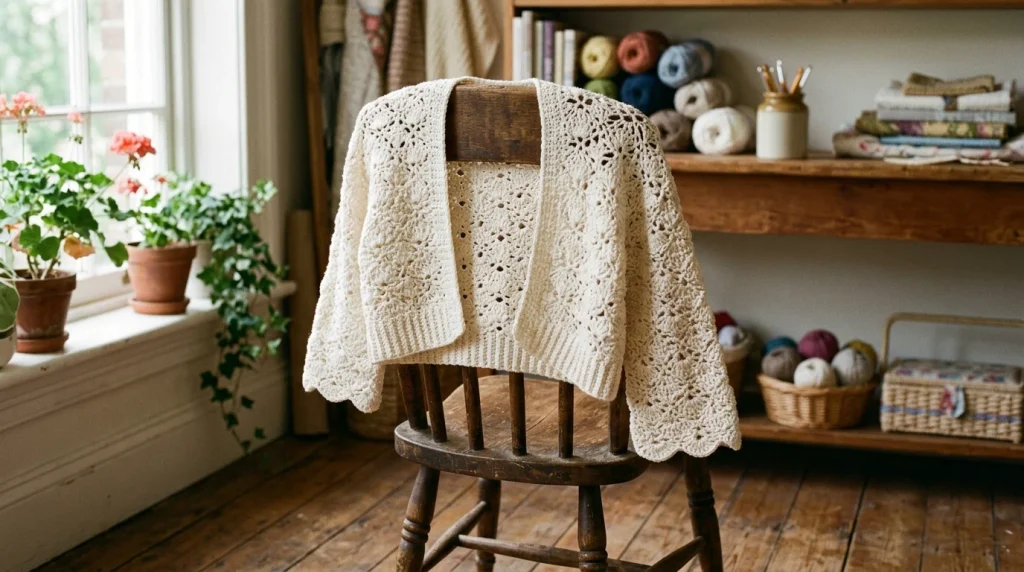
Lighter yarns tend to suit this project better than the worsted weight used for a full sweater or vest. A DK weight, a sport weight, or even a fingering weight held with a slightly larger hook gives the airy, less bulky look most bolero patterns are going for, especially if the piece is meant to sit over a dress or a fitted top rather than provide real warmth.
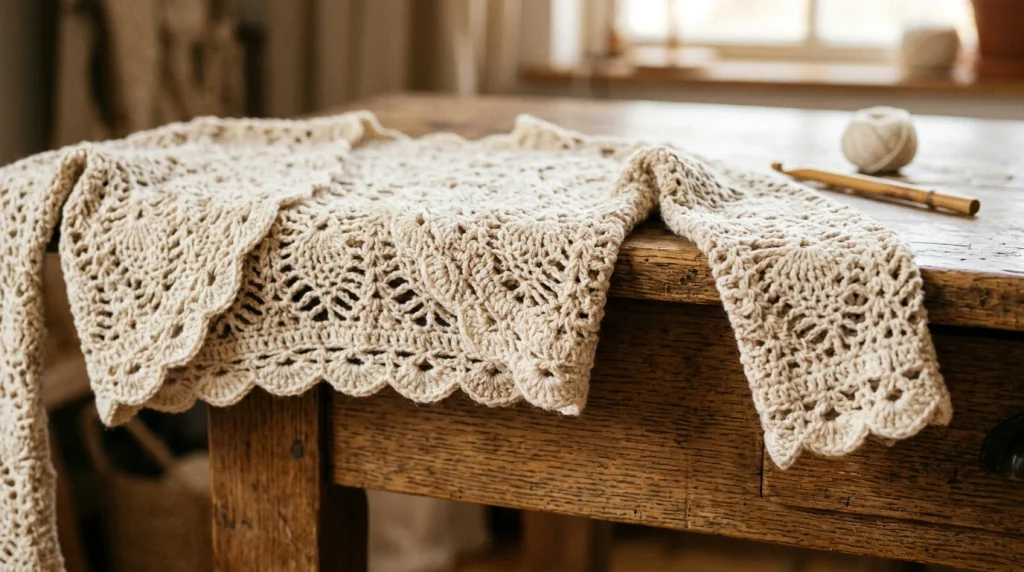
A shell stitch, a simple mesh, or an open filet pattern all work well for a bolero specifically, since the decorative, lacier look is part of the point here in a way it isn’t for a heavier layering piece like a vest. If warmth matters more to you than the lighter aesthetic, a solid stitch in a wool blend still works, just expect a slightly different finished look than the classic lace-style bolero.
Swatch in whatever stitch you’re using, and pay close attention to how it behaves around the shoulder seam specifically — a stitch that looks fine flat can pull oddly once it’s shaped around a sleeve cap and armhole this small.
Easy Bolero Jacket Crochet Pattern Free Options: Choosing Your Sleeve Style
The sleeve is really what sets a bolero apart from a sleeveless vest, and there’s more than one reasonable way to build it.
A set-in sleeve, crocheted separately and seamed into a shaped armhole, gives the cleanest, most tailored look. It takes more matching between the sleeve cap curve and the armhole opening, but it holds its shape at the shoulder better than the alternatives.
A raglan-style sleeve, worked as part of a continuous top-down construction, skips the separate seaming step and increases evenly from the neckline outward. This is generally the more approachable build for a first bolero, since there’s no sleeve cap to match against an armhole afterward — the shaping happens gradually as you go.
A kimono-style sleeve, where the sleeve is simply an extension of the body panel rather than a separately shaped piece, is the simplest of the three by a wide margin. It sacrifices some fit precision at the underarm for a much easier construction, which makes it a reasonable starting point if this is your first sleeved garment of any kind.
Sizing Guide for a Bolero Jacket Crochet Pattern Free of a One-Size Assumption
Four measurements matter here: chest or bust circumference, body length from shoulder to hem (which stays short on a true bolero), sleeve length, and shoulder width.
Because a bolero is worn open and layered rather than fitted snugly, ease is usually a little more generous through the chest than a fitted top would need, while the body length itself stays deliberately short — most boleros land somewhere between the natural waist and a few inches above it.
| Size | Chest/Bust | Body Length | Sleeve Length |
|---|---|---|---|
| XS/S | 34–36 in | 13–14 in | 17–18 in |
| M | 38–40 in | 14–15 in | 18–19 in |
| L | 42–44 in | 15–16 in | 19–20 in |
| XL | 46–48 in | 16–17 in | 20–21 in |
As with any garment guide, treat these numbers as a reference rather than a rule. If you have a bolero or a similarly cropped, open-front piece that already fits the way you like, measuring that directly will beat working from a chart.
How to Make a Bolero Jacket Crochet Pattern Free of Fixed Row Counts?
This walks through a raglan-style build, since it avoids a separate sleeve-cap seaming step and tends to be the friendlier option for a first attempt at this particular garment shape. Exact stitch and row numbers depend on your gauge and chosen size, so what follows is the logic rather than fixed counts.
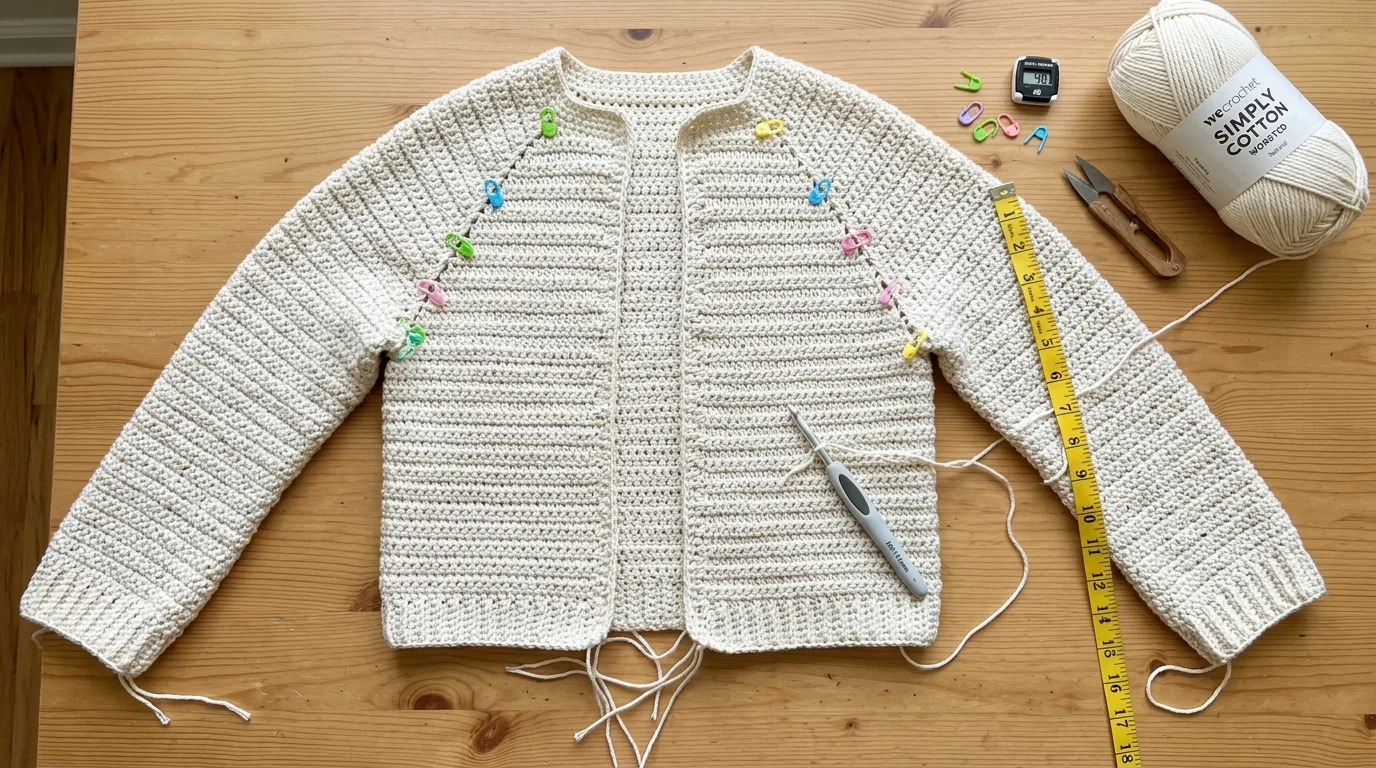
Starting at the neckline. Chain a small starting round or row at the neckline, then divide the stitches into four sections — two sleeves and two body sections (front and back count as one continuous piece at this stage, since a bolero typically stays open at the front).
Raglan increases. Increase evenly at the four points where the sleeve sections meet the body sections, spaced out over the next several rounds or rows. This is the step that shapes the shoulder and upper chest simultaneously, so keeping the increases even on all four points matters more here than almost anywhere else in the build.
Separating the sleeves from the body. Once the raglan increases bring the piece to your target chest width, set the sleeve stitches aside on scrap yarn or a stitch holder, and continue working the body section on its own from that point down to your target body length.
Finishing the sleeves. Pick each sleeve back up from where it was set aside, and work it down to your target sleeve length, adjusting the stitch count gradually if you want a fitted cuff versus a looser, flared sleeve opening.
Edging. A round of single crochet or a simple shell edging along the front opening, hem, and cuffs finishes the raw edges and adds a bit of visual definition, especially useful on a piece worked in an open, lacy stitch where the raw edge might otherwise look unfinished.
Simple Bolero Jacket Crochet Pattern Free Fixes for Common Problems
The sleeves twist or don’t sit flat at the shoulder. This almost always traces back to uneven raglan increases somewhere in the shaping rounds. Count stitches at each of the four raglan points after every increase round, not just at the end of the shaping section, so an imbalance gets caught early rather than after the sleeves are already separated.
The bolero rides up or shifts out of place while worn. Since there’s no closure holding it shut, a bolero depends more on shoulder fit than a buttoned garment does. If it keeps shifting, the shoulder width measurement was likely too generous — a snugger shoulder fit, even with extra ease through the chest, keeps the piece anchored better.
The piece looks unfinished or the edges curl. This is usually a missing or under-worked edging round. A stitch that curls on its own, like plain single crochet, benefits from a contrasting texture at the edge, such as a shell stitch or a picot border, both for structure and for a cleaner finished look.
The sleeve length feels off even though it measured correctly flat. Sleeves behave differently under the weight of movement than they do lying flat during construction. Trying the piece on before the very last rows are finished catches this while it’s still easy to add or remove a row or two.
Crochet Pattern Free Tips for Getting the Occasion-Wear Look Right
A bolero worked in a fine, lace-weight yarn with an open shell or filet stitch is the version most commonly styled for weddings, proms, or other dressier occasions, since the airy, semi-sheer look pairs naturally with a fitted dress rather than competing with it for attention.
A slightly heavier version in a solid stitch, worked in a mid-weight cotton or wool blend, functions more as an everyday layering piece — think of it as a lightweight alternative to a cardigan for mild weather rather than an occasion piece.
Ribbon ties added at the front opening, rather than buttons, keep the traditional open, closure-free bolero look while still giving the option of a loose, single point of closure if the wearer wants one — this is a common middle ground between a fully open bolero and a buttoned cardigan-style front.
FAQs
Can I make a bolero without any sleeve shaping at all?
Yes — a simple rectangular shrug, where a flat panel is folded and seamed only partway to create armholes, skips sleeve construction entirely. It won’t have the more tailored look of a set-in or raglan sleeve, but it’s a genuinely simpler starting project if sleeve shaping feels like too big a jump right now.
Why does my bolero feel too short or too long once worn, even though the body length measured correctly flat?
This is common with cropped garments specifically, since a few inches of length reads very differently on the body than it does laid flat on a table. Trying the piece on before finishing the last rows of the body section, the same way you would with the sleeves, catches this early.
Can I convert a shrug pattern into a full bolero jacket crochet pattern with sleeves?
Not directly, since a shrug’s simplified armhole construction doesn’t translate into true sleeve shaping without a fairly substantial rework. The body length and general silhouette can carry over as a starting reference, but the sleeve construction itself needs to be planned and built separately.
What yarn weight gives the most versatile bolero, if I only want to make one?
A DK weight lands in the middle — light enough to layer over a dress for a dressier occasion, but substantial enough to also work as a casual everyday piece over a t-shirt or tank, without the very sheer look a fingering-weight version tends to have.

Leave a Reply