You open a pattern, scan the first row, and hit “3 tr in next st.” Now you’re stuck wondering what does tr mean in crochet, and whether you’ve been doing it wrong all along. The abbreviation itself is simple. The trouble is that the same two letters point to two different stitches depending on where the pattern was written.
This guide sorts that out. You’ll see what tr stands for, how the US and UK versions differ, how to tell which one your pattern uses, and what to do when the stitch count doesn’t add up.
TR at a glance
- tr = treble crochet
- US pattern: two yarn overs, the tall stitch
- UK pattern: one yarn over, the same stitch as a US double crochet
- Check for “sc” in the abbreviation list to tell which version you have
Table of Contents
What Does TR Stand For? The Quick Version
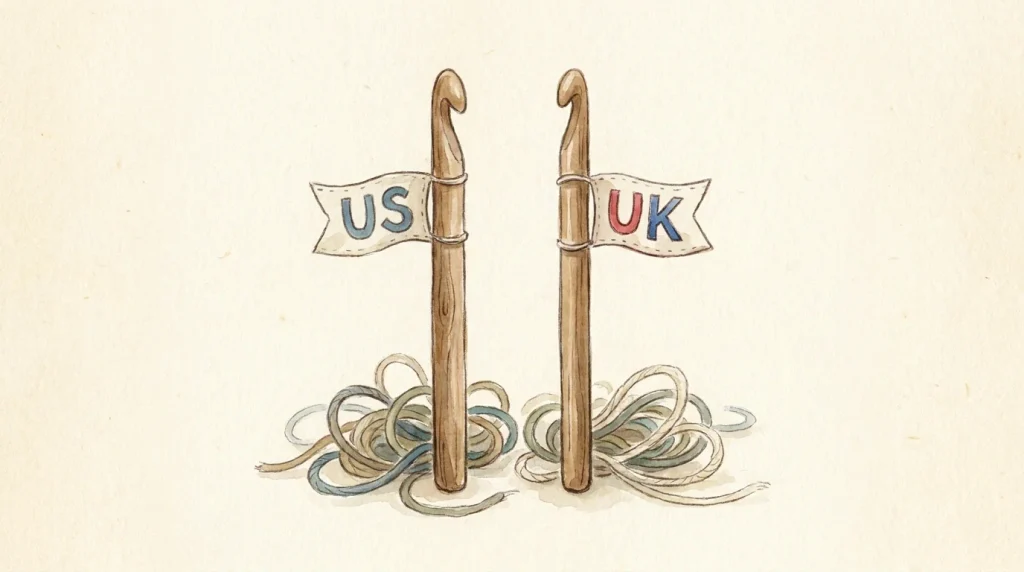
If you only need the fast answer: what does tr stand for? Treble. What does tr in crochet mean in a US pattern? A stitch with two yarn overs. What does tr mean in a UK pattern? One yarn over, the same stitch US crocheters call double crochet. Everything below explains why, and how to avoid mixing them up.
What Does TR Mean in Crochet?
In crochet, tr stands for treble crochet. The Craft Yarn Council, which sets the standard abbreviations most US publishers follow, lists tr as treble crochet. Some US patterns call the same stitch “triple crochet” because you wrap the yarn around the hook twice. Treble and triple are one stitch with two names.
That’s the short answer to what does tr mean in crochet. The longer answer matters just as much, because UK-style patterns also use tr, but for a shorter stitch.
What Does TR Mean in US Crochet Terms?
In US terms, tr is a tall stitch. It sits above the double crochet (dc) in the height ladder: slip stitch, single crochet (sc), half double crochet (hdc), double crochet (dc), treble crochet (tr), double treble (dtr).
Here’s how the stitch is made:
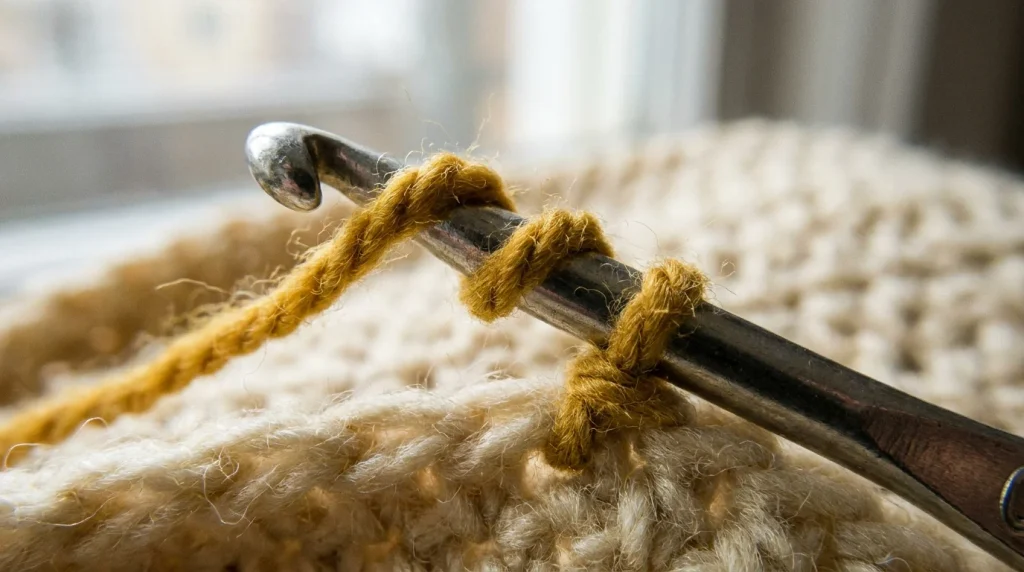
- Yarn over the hook twice.
- Insert the hook into the stitch or space the pattern names.
- Yarn over and pull up a loop. You now have four loops on the hook.
- Yarn over and pull through two loops. Three remain.
- Yarn over and pull through two loops again. Two remain.
- Yarn over and pull through the last two loops. One loop remains, and the stitch is done.
The rhythm is “yarn over, pull through two” three times. If you already know double crochet, a treble is the same motion with one extra yarn over at the start and one extra pull-through at the end. For a photo walkthrough, the guide on how to tr in crochet covers hand positions in more detail.
The turning chain matters too. At the start of a row, a treble is usually replaced by a chain of four, which counts as your first tr. Patterns often write this as “ch 4 (counts as first tr).” If your edges flare out or pinch in, check that chain first.
What Does TR Mean in UK Crochet Patterns?
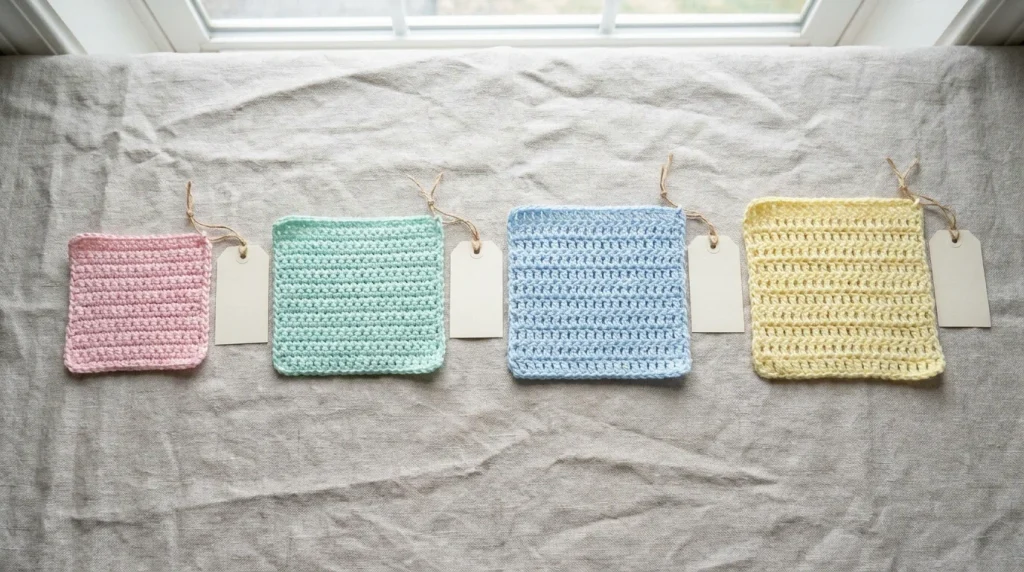
Here’s where the confusion starts. UK terms sit one step off from US terms, because the UK system has no stitch called single crochet:
| US term | UK term |
|---|---|
| single crochet (sc) | double crochet (dc) |
| half double crochet (hdc) | half treble (htr) |
| double crochet (dc) | treble (tr) |
| treble crochet (tr) | double treble (dtr) |
Read the third row again. A UK tr is a US double crochet, made with one yarn over, not two. The Craft Yarn Council’s chart pairs the US and UK names side by side, and Simply Crochet publishes a handy UK to US conversion list if you want a second reference.
So what does tr mean in crochet if the pattern is British? One yarn over. Make the wrong one and the gauge won’t match, the stitch counts drift, and any shaping built on stitch height looks off.
Which Version? What Does TR Mean in Your Pattern
Most designers state it in a notes box near the materials list. If yours doesn’t, look for these clues:
- An abbreviation list. If sc appears, it’s almost certainly US. UK patterns have no single crochet, so their list starts at dc.
- “Gauge” or “tension.” US patterns say gauge. UK patterns say tension.
- The designer’s location. Not a guarantee, since many UK designers now publish in US terms, but it’s a decent hint.
- The look of the finished motif. If “tr” appears where the photo clearly shows a standard double-crochet cluster, you’re probably reading UK terms.
When none of that settles it, swatch the first repeat. If the fabric matches the photo, you’ve got the right stitch. If it looks too tall and airy, you’ve likely used the longer one. Wikipedia’s list of crochet stitches also notes that abbreviations can vary between designers even when a standard exists, so a quick look at the pattern notes is worth thirty seconds.
A Quick Test: What Does “3 tr” Mean Here?
Say a granny-square pattern tells you to work “3 tr, ch 2, 3 tr” in each corner. In US terms that’s a lot of tall stitches, and the square would grow large and open fast. In UK terms it’s three double crochets, chain two, three double crochets, which is exactly what a classic granny corner looks like. The classic granny square pattern on this site is built from three-double-crochet clusters, so a UK-written version of it would say “3 tr.”
The same logic applies to zigzag fabric. A ripple stitch built from double crochet in US terms would be written with tr in UK terms. Same fabric, different label.
Other Abbreviations: What Does TR2tog Mean?
Because tr is short, it travels in packs:
- tr2tog: treble two together, a decrease. Start one treble, stop before the last pull-through, start a second in the next stitch, then pull through everything.
- 2 tr in same st: an increase.
- dtr: double treble in US terms, with three yarn overs.
- tch: turning chain. Not a stitch, but it often sits next to tr in the instructions.
- BLO, FLO, tbl: loop positions. “Tr BLO” means a treble worked in the back loop only.
If a line mixes these, read left to right and take one stitch at a time. “Tr2tog over next 2 sts” is a single decrease, not two separate stitches.
What Does TR Mean for Texture and Drape?
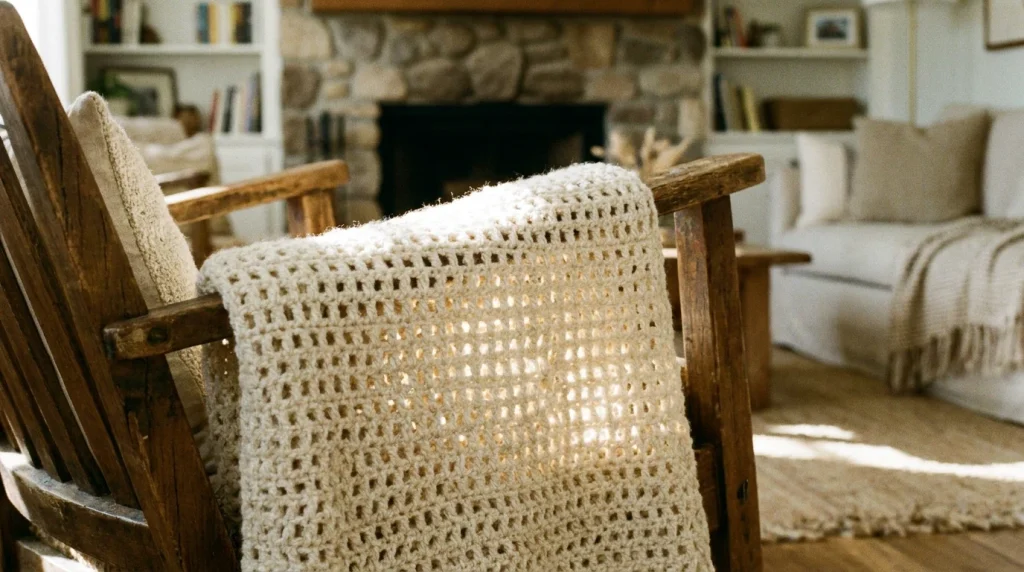
Knowing the label helps, but knowing what the stitch does helps more. Treble crochet builds fabric fast, because each stitch is tall and you need fewer rows to reach a given length. The tradeoff is bigger gaps, so the fabric is looser and drapier than single crochet.
That makes tr a good match for shawls and wraps, lace and openwork, and quick blankets in bulky yarn. It’s a poor match for baskets or amigurumi, which need tight, short stitches so the structure holds. For something in the middle, the half double crochet guide shows how a mid-height stitch balances coverage with drape.
A smooth yarn with some weight, such as cotton or acrylic worsted, shows each tall post clearly. Fuzzy yarns hide stitch definition, which suits a shawl but frustrates a learner. Because tall stitches run loose, many crocheters drop a hook size when they want firmer fabric. Swatch before you commit: a gauge swatch in treble describes both width and height, so match both.
Common Mistakes With TR (and Quick Fixes)
Most errors start with not knowing what does tr mean in the specific pattern on your lap. Once that’s settled, these are the slips that show up most often.
Counting the turning chain wrong. If a row ends one stitch short, you probably skipped the top of the turning chain from the row below. Work your last tr into that chain.
Forgetting the second yarn over. It happens most after a row of shorter stitches. If a tr looks suspiciously short, count the loops: you should see four on the hook after pulling up the first loop.
Pulling through all loops at once. Treble is built in pairs. Grabbing three loops at once makes a lumpy stitch and throws off the height.
Mixing US and UK mid-project. Write the terms you’re using at the top of the page.
Working too tightly. Tall stitches need slack. If the fabric puckers, loosen the pull-through steps.
Reading a Row: What Does TR Mean Stitch by Stitch?
Take a US-term row: “Ch 4 (counts as first tr), tr in each st across, turn.” Chain four, work one treble into every stitch of the previous row, finish with a treble in the top of the turning chain below, then turn and repeat.
The UK version reads: “Ch 3 (counts as first tr), tr in each st across, turn.” The chain drops to three because a UK tr is the shorter stitch. So a four-chain turning chain beside the letters tr suggests US terms, and three suggests UK. It’s not a perfect rule, but it can catch a mismatch before you’ve worked three wrong rows.
FAQs
What does tr mean in crochet?
Treble crochet. In US patterns it’s the stitch with two yarn overs. In UK patterns it’s the stitch US crocheters call double crochet.
Is tr the same as dc?
In UK terms, yes. In US terms, no: tr is taller.
What is a triple crochet?
Another name for US treble crochet. The abbreviation is still tr.
What does tr mean in a crochet pattern with no terminology note?
Check the abbreviation list for sc, look for “gauge” or “tension,” and swatch the first repeat. If the swatch matches the photo, your reading is right. If it looks too tall, switch to the shorter stitch.
Can I convert a UK pattern to US terms?
Yes. UK dc becomes sc, UK htr becomes hdc, UK tr becomes dc, and UK dtr becomes tr. Convert before you start, not halfway through.
Keep This Cheat Sheet Handy
When you see tr, ask two questions: where was this pattern written, and does the abbreviation list include sc? Those answers settle what does tr mean in crochet for that pattern, every time. For more stitch guides and free patterns, browse the MapleHookCrochet blog and pick a project that puts your new treble skills to work.

Leave a Reply