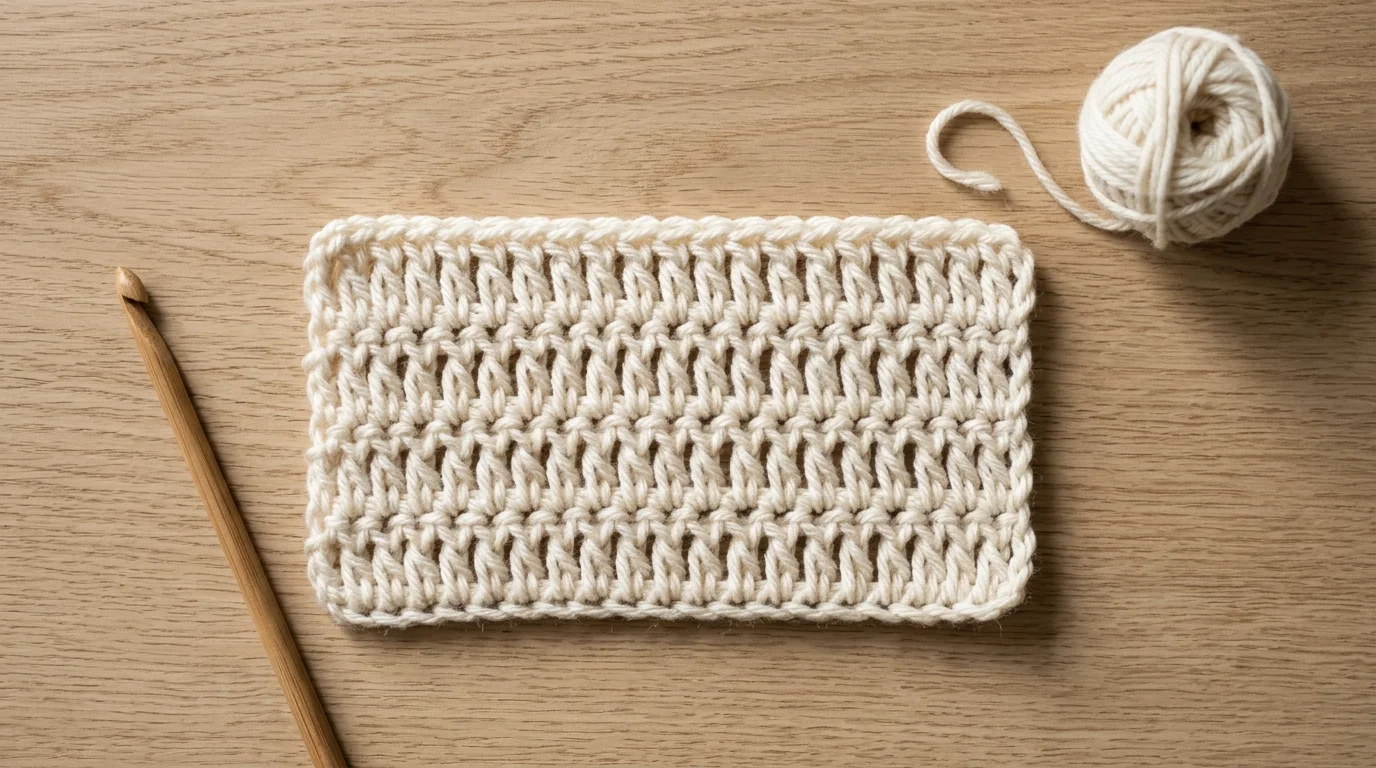
Learning how to tr is really just learning the treble crochet stitch. Yarn over twice, put your hook in, pull up a loop, then yarn over and pull through two loops—three times total. That’s the whole stitch.
I’ll be honest: the first time someone explained treble crochet to me, my eyes glazed over. Two yarn overs? Three pull-throughs? It sounded like a magic trick. Then I actually made one, and about four stitches later my hands had it memorized. Yours will too.
In US patterns, tr is shorthand for treble crochet, a tall stitch that gets you through rows faster than double crochet ever will. UK patterns, though, use those same two letters for something shorter. Check which one you’re working from before you start. I once spent a whole evening convinced my tension had gone rogue when really I’d just followed a UK chart with US habits.
This guide covers what tr means, how to tr in crochet from a foundation chain, how to handle later rows and rounds, and what to do when tall stitches misbehave. US terms throughout unless I say otherwise.
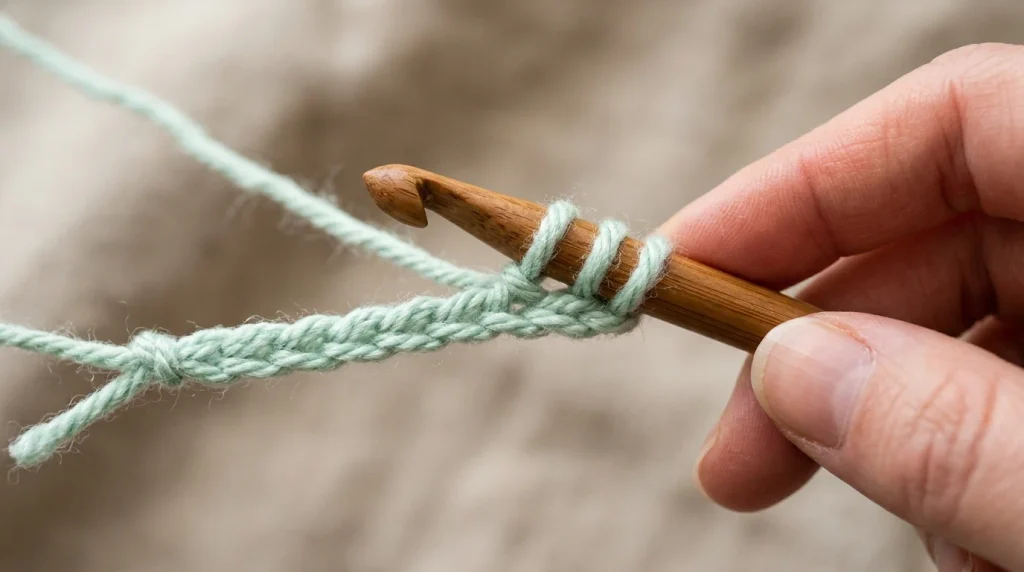
Table of Contents
At a Glance
- Stitch: treble crochet, written tr in US patterns
- Skill level: confident beginner who can already chain and make double crochet
- Yarn overs before inserting the hook: two
- Loops on the hook after pulling up a loop: four
- Turning chain: chain 4, which usually counts as the first tr
- Foundation chain: stitches wanted plus 3, with the first tr in the fifth chain from the hook
- UK equivalent: double treble (dtr)
What Does TR Mean in Crochet?
Tr stands for treble crochet. Simple as that. See “tr in each st across” in a pattern? One treble crochet in every stitch of the row below. The Craft Yarn Council’s crochet abbreviations master list is worth bookmarking, by the way—it confirms tr as US terminology and also lists the spin-offs you’ll bump into eventually, like tr2tog, trtr, and the post stitches FPtr and BPtr.
What does that actually look like in your hands? A tall stitch made with two yarn overs before the hook goes into the work, then finished in three separate pulls through two loops each. That extra height adds up fast. Every tr eats more vertical space than a double crochet, which is why a treble blanket grows under your fingers while a single crochet one seems to take forever.
Some tutorials call this stitch triple crochet because of the yarn overs. The Craft Yarn Council list doesn’t use that name, so treble is the safer word to search for.
Is TR the Same in US and UK Patterns?
No—and if you’ve ever ended up with a tr row that came out mysteriously short, this is probably why. Same two letters, different stitch. US tr means two yarn overs. UK tr means one, which puts it right in line with a US double crochet. The Craft Yarn Council’s term-difference table pairs US double crochet with UK treble, and US treble with UK double treble.
| US abbreviation | Yarn overs before inserting the hook | Loops on hook after pulling up a loop | UK name |
|---|---|---|---|
| sc | 0 | 2 | dc |
| hdc | 1 | 3 | htr |
| dc | 1 | 3 | tr |
| tr | 2 | 4 | dtr |
| dtr | 3 | 5 | trtr |
Following a tutorial on how to tr? Check whether it’s US or UK before you commit to it. Gauge and hdc in the materials list means US terms. Tension and htr means UK. It’s a small thing to check and it saves a lot of unraveling.
What Do You Need to Learn How to TR?
Honestly? Not much.
- Light-colored worsted-weight yarn, smooth rather than fuzzy, so you can actually see your loops
- A hook in whatever size the yarn label recommends
- Scissors and a yarn needle
- A stitch marker for the top of your turning chain
Please skip the dark or fuzzy yarn for your first swatch. I know that charcoal alpaca is calling your name. It will also swallow every loop you’re trying to count, and you need to read four of them on the hook at once. Save the pretty stuff for swatch number three.
How to TR in Crochet: The Foundation Row
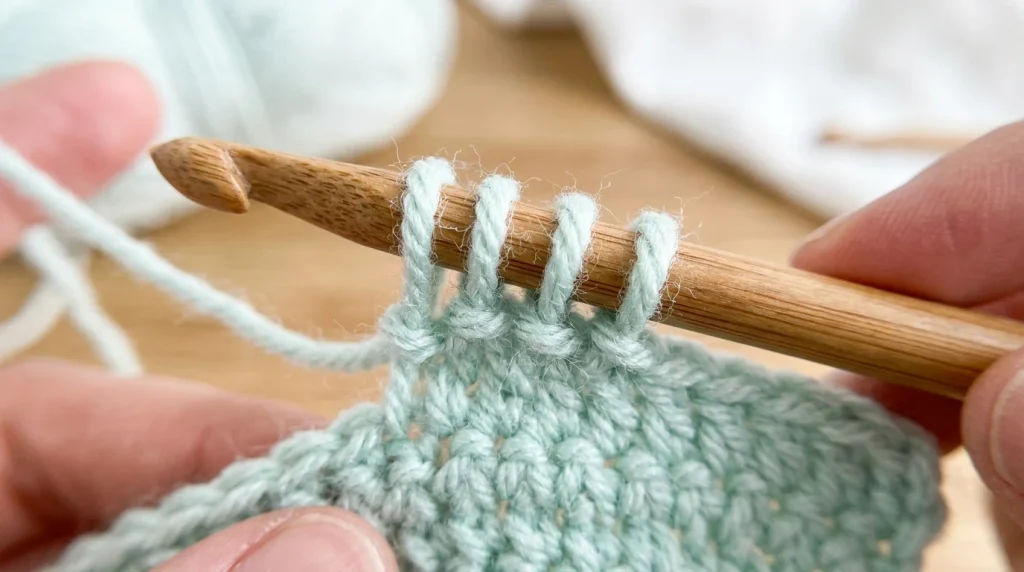
A 12-stitch swatch is the easiest way to learn how to tr. Chain 15—your 12 stitches plus three. Those four chains you skip at the start stand in for the first stitch, which is why the math lands on 11 worked trebles plus one.
- Make a slip knot and chain 15. Keep it loose, loose enough for the hook to slide in with two yarn overs sitting on it.
- Yarn over twice, wrapping the yarn from back to front.
- Insert the hook into the fifth chain from the hook. The four skipped chains count as your first stitch.
- Yarn over and pull up a loop. You should have four loops on the hook.
- Yarn over and pull through the first two loops. Three remain.
- Yarn over and pull through the next two loops. Two remain.
- Yarn over and pull through the last two loops. One loop remains, and your first tr is done.
- Repeat steps 2 to 7 in each remaining chain. That gives you 11 trebles, or a row of 12 counting the skipped chains.
Step 3 is where most people hesitate. Trust the count—fifth chain from the hook, not the fourth. And keep an eye on your loops: four, three, two, one. Five loops after step 4 means you wrapped three times. Three loops means a yarn over slipped off somewhere. Either way, pull it out and start that stitch over. A single redo now beats discovering a lump in your fabric ten rows later.
How to TR in Crochet in the Next Row
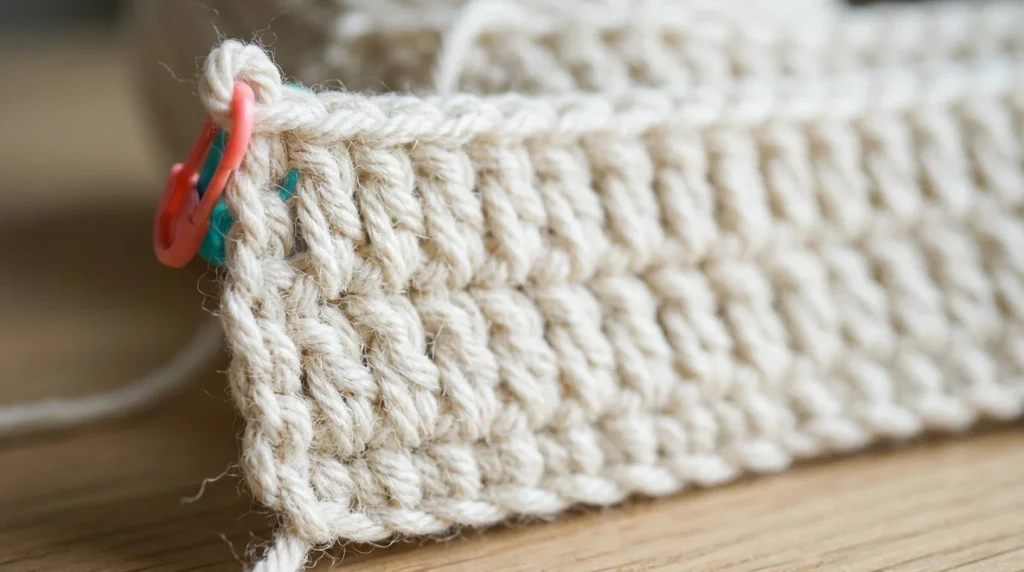
Chain 4 and turn. That chain lifts your yarn up to treble height and counts as the first stitch, so skip the stitch right underneath it and work your first tr into the next one. Then it’s one tr per stitch across. If you’ve made double crochet before, this is the same idea with one extra yarn over at the start.
The last stitch of the row is the one that trips people up. You want a tr in the top of the turning chain from the row below, the fourth chain from the hook. Get that right and your row ends with 12 stitches: the turning chain plus 11 trebles. I’d count every row until you trust your eye. And if your edges start creeping inward, you already know who to blame—that stitch you skipped.
One thing to watch: some designers treat the turning chain as height only, not a stitch. The pattern notes should tell you which convention applies.
How to TR in the Round
Chain 4 to start each round and count it as the first stitch. Then work one tr in each remaining stitch around and join with a slip stitch to the top of the chain 4. Chain 4 again for the next round.
Whether to turn between rounds depends on the pattern. Some do, some don’t. Follow whichever one you’re using, because turning does change the look of the fabric.
How to TR for Increases and Decreases
An increase is just two tr in the same stitch. Do it once on a 12-stitch row and you end up with 13. A decrease is tr2tog, which turns two stitches into one:
- Work a tr until two loops remain on the hook, stopping before the final pull-through.
- Yarn over twice, insert the hook into the next stitch, yarn over and pull up a loop. Five loops are on the hook.
- Yarn over and pull through two loops. Four remain.
- Yarn over and pull through two loops. Three remain.
- Yarn over and pull through all three loops.
You’ve just lost a stitch. Put decreases where the pattern tells you to—their placement is what shapes the fabric, not the decrease itself.
TR vs DC: Which Stitch Should You Choose?
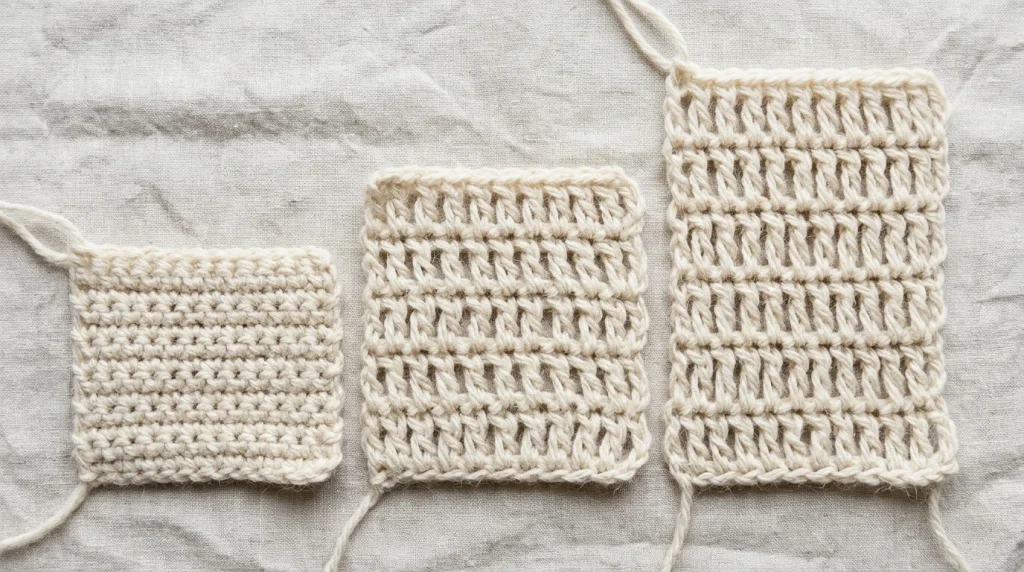
Once you know how to tr, picking between it and double crochet comes down to what you’re making. Want height, speed, and drape? Go with tr. Want a denser fabric with fewer gaps? dc is your stitch. Double crochet needs one yarn over before you insert the hook, then two pulls through two loops. Treble adds a second yarn over and a third pull, and that extra height is what opens up the space between stitches. Plenty of blankets and garments mix the two, using tr for drapey sections and dc where the fabric needs to hold its shape.
Still getting comfortable with the basics? The single crochet stitch tutorial and half double crochet guide cover the shorter stitches.
What Can You Make Once You Know How to TR?
Tall stitches shine in projects where drape and speed matter more than density. The Loopy Lamb’s treble crochet tutorial suggests blankets, lacy summer tops, and market bags, and notes that a fabric worked entirely in tr looks nearly identical on both sides.
If you want somewhere to put those tall-stitch habits to work, our crochet blanket guide covers structure and sizing for a first blanket. The simple crochet shawl pattern repeats one row of double crochet, and the classic granny square pattern uses double crochet clusters. Both build the same chain-and-turn rhythm you’re practicing with tr.
Common Treble Crochet Problems and Fixes
How to TR Without Large Gaps
Tall stitches naturally leave more space between them, and loose tension makes it worse. Pull each loop snug—firm, not strangling—keep your loop heights even, and try a hook one size smaller on a fresh swatch.
How to TR Without Slanting Edges
Nine times out of ten, a missed end stitch is behind it. Count against 12, mark the turning chain, and make sure the first tr of each row goes into the second stitch, not the first.
How to TR When the Hook Won’t Fit
That’s tight tension, usually in the foundation chain. Work the chain with a hook one size larger, then switch back to your regular hook for the first row.
FAQs
What Is TR in Crochet?
Tr is shorthand for treble crochet, a tall stitch that starts with two yarn overs before the hook goes into the work. In UK patterns, tr means something shorter—same as a US double crochet.
How Many Chains Do You Need to Start a Row of TR?
Take the number of stitches you want and add three. Then work your first tr into the fifth chain from the hook. A 20-stitch row means chaining 23.
Does the Chain 4 Count as a Stitch?
Usually, yes—but not always. Plenty of patterns count it as the first treble, while others treat it as height only. Check the notes and stick with one rule throughout.
How to TR in Crochet From a UK Pattern?
UK tr is a US double crochet, so what you actually want is the UK dtr. Use the table above to translate, then follow the US steps.
Is It Hard to Learn How to TR?
Not if you already know double crochet. The only new pieces are the second yarn over and the extra pull-through. Practice the loop count on a small swatch and it’ll click fast.
Final Thoughts
Once you know how to tr, the taller stitches follow the same logic: one more yarn over, one more pull-through. Keep the four-three-two-one loop count in your head, chain 4 to turn, and don’t forget that last stitch in the top of the chain. Ready for a real project? Browse our crochet patterns for beginners.

Leave a Reply