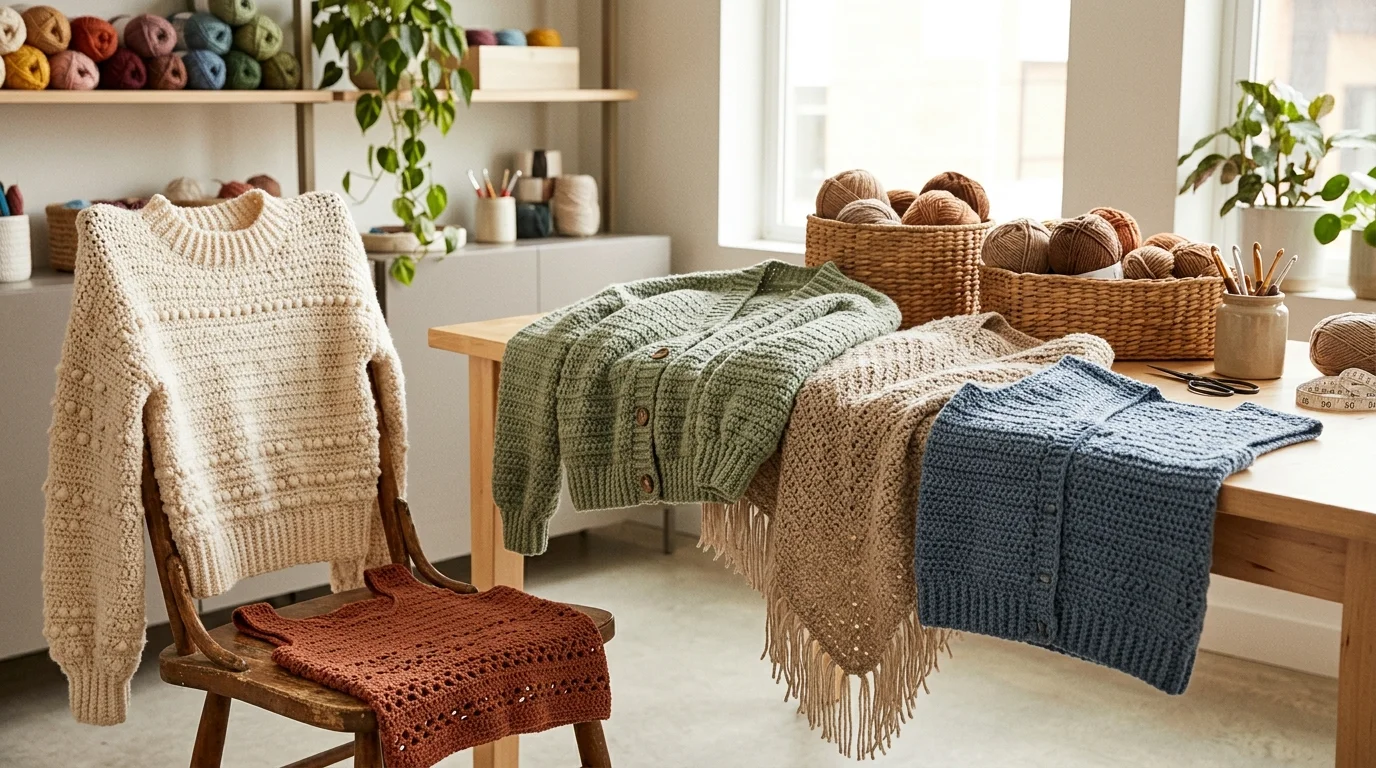
Crochet clothing can be practical, comfortable, and easy to adapt to your own style. You can make a lightweight summer top, a warm sweater, a cardigan for layering, or a loose poncho without needing complicated stitches.
The harder part is often choosing the right project. Some crochet clothing patterns are made from simple rectangles, while others require careful shaping around the neckline, shoulders, waist, sleeves, and armholes. Your skill level, yarn choice, and the amount of time you have will all affect which project makes sense.
If this is your first wearable project, don’t feel that you have to start with a fitted sweater. A vest, shrug, loose top, or poncho can teach you many of the same skills with less shaping.
Here are 16 clothing projects to consider, followed by practical advice about sizing, yarn, gauge, and choosing a pattern.
Table of Contents
1. Crochet Sweater
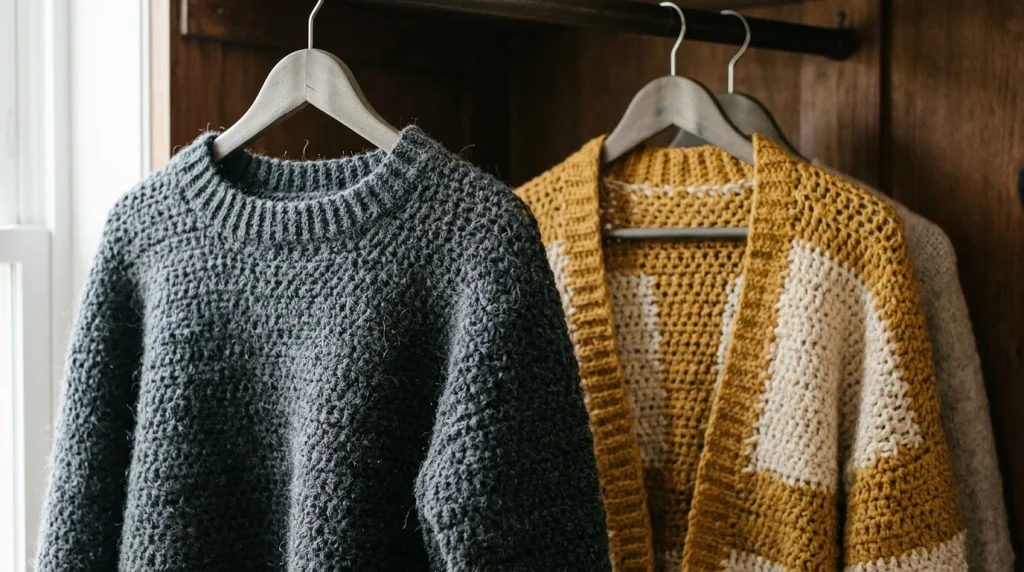
A sweater is one of the most popular choices when looking through crochet clothing patterns.
You can find sweaters made with separate front and back panels, top-down construction, raglan shaping, or other methods. For a first sweater, a straightforward construction can make it easier to understand how the body and sleeves come together.
The most important part is fit. Before starting, check your bust or chest measurement, desired ease, body length, sleeve length, and the pattern’s finished measurements.
Don’t choose a size based only on S, M, L, or XL. Compare your own measurements with the finished garment measurements provided by the pattern.
If you want to learn more about sweater construction, the site’s crochet sweater pattern guide is a useful internal resource.
2. Crochet Cardigan
A cardigan is a useful option if you prefer an open-front garment.
The construction can be fairly simple, especially when the body is made from flat panels. You can add sleeves, a front border, pockets, buttons, or ties depending on the design.
Cardigans also give you more flexibility with fit because the front doesn’t need to close around the body.
When choosing yarn, consider how the finished fabric will hang. A very heavy yarn can make a large cardigan feel bulky, while a lighter yarn can create a softer layer.
For another look at cardigan construction, the site’s crochet cardigan pattern article can be used as an internal reference.
3. Crochet Top
A top can be a better first garment than a full sweater because it usually requires less yarn and less construction.
There are many easy crochet clothing patterns for tops, including sleeveless designs, short-sleeved tops, cropped styles, and loose-fitting pieces.
Pay attention to the bust measurement, neckline, armholes, and strap placement. If the stitch pattern has considerable stretch, the finished garment may need to be smaller than your body measurement.
For warm weather, a lighter yarn and an open stitch can create a more breathable fabric. For cooler weather, a denser stitch gives more coverage.
4. Crochet Vest
A vest removes the need to make full sleeves, which makes it a useful step between accessories and larger garments.
You can make a vest from two main panels and add edging around the neckline and armholes. Other designs use a continuous construction or motifs.
The amount of ease you choose will change the way the vest sits. A fitted vest needs more attention to measurements, while a loose vest is more forgiving.
This makes a vest one of the more approachable crochet clothing patterns for beginners who want to try wearable crochet for the first time.
5. Crochet Jersey
A crochet jersey is a larger project and requires more attention to proportions.
The body, sleeves, neckline, and cuffs all need to work together. If the gauge is different from the pattern’s gauge, the change can become noticeable across a large garment.
Before starting, make a swatch using the actual yarn and stitch pattern you’ll use. Gauge is especially important for clothing because it affects the final dimensions of the garment.
You can also check the site’s crochet jersey patterns guide for additional construction ideas.
6. Crochet Bolero
A bolero is shorter than a cardigan and usually finishes around the waist or slightly above it.
Because of its cropped shape, it can be used as a light layer over a dress or top. You can make one with short sleeves, long sleeves, open stitches, or a more solid fabric.
If you want to compare different garment shapes, the site’s bolero jacket crochet pattern is another useful internal reference.
7. Crochet Skirt
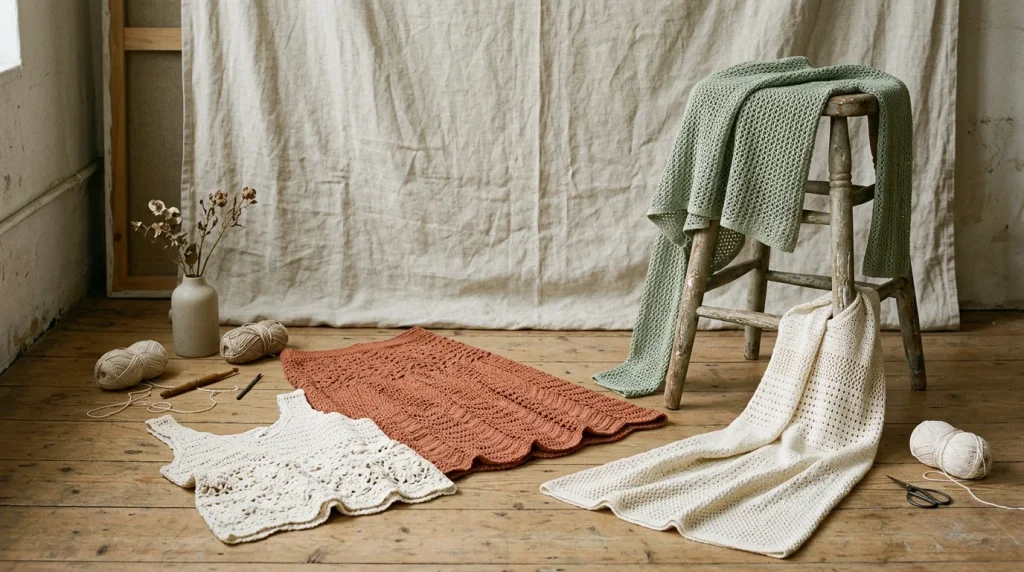
A crochet skirt can be worked as a simple tube or shaped around the waist and hips.
The waistband deserves particular attention because the skirt needs to stay comfortably in place. Depending on the design, you might use ribbing, a drawstring, or elastic.
The fabric should also have enough drape for the intended style. A very stiff stitch can produce a completely different result from a soft, flexible fabric.
When looking through crochet clothing patterns ideas, consider the type of clothing you already wear. A simple skirt in a color that works with your existing wardrobe is more useful than a complicated design you’ll rarely wear.
8. Crochet Dress
A crochet dress is a larger project, but there are many different construction options.
A loose shift dress requires less shaping than a fitted dress. An A-line design gives more room around the lower body, while a fitted style needs more careful measurements.
You can also make a dress from motifs, panels, or continuous rounds.
For a first dress, a simple silhouette is generally easier to manage. You can focus on getting the neckline, armholes, length, and overall width right without also dealing with complicated shaping.
9. Crochet Shrug
A shrug can be one of the simpler garments to construct.
Some designs begin with a rectangle that is folded and seamed to create the sleeves and back. Others use a more traditional garment construction.
Because a shrug usually has a loose fit, it can be easier to adapt than a fitted sweater.
This makes it a useful project for someone searching for simple crochet clothing patterns without wanting to begin with a full-sized garment.
10. Crochet Poncho
A poncho is another forgiving garment because it doesn’t need to follow the body’s shape closely.
Many ponchos are built from rectangles, squares, triangles, or other simple shapes. Once joined, these pieces create a loose garment that falls from the shoulders.
The neckline is still important. If it is too small, the garment can be uncomfortable. If it’s too large, the poncho may slip from the shoulders.
For beginners, this type of construction can be easier to understand than a fitted sweater.
11. Crochet Tank Top
A tank top is a practical warm-weather garment and doesn’t require sleeves.
The basic pieces are the front, back, shoulder straps, and armholes. Some patterns reduce the number of seams by working larger sections continuously.
A tank top is also a good project for testing how a particular yarn behaves against the body. Cotton, bamboo blends, and other fibers can have very different levels of drape and stretch.
If you’re looking for free crochet clothing patterns, tank tops are worth considering because there are many variations available at different skill levels.
12. Crochet Tunic
A tunic is longer than a typical top but usually shorter and simpler than a dress.
The loose shape means you don’t always need complicated waist shaping. You can concentrate on getting the neckline, shoulders, armholes, and length right.
A tunic can also be worn over trousers or leggings, making it a flexible addition to a handmade wardrobe.
For someone who has already made a few smaller garments, a loose tunic can be a good next project.
13. Crochet Shrug Cardigan
A shrug-style cardigan combines the short shape of a shrug with some of the structure of a cardigan.
You can adjust the sleeve length, body coverage, and front edging depending on how you plan to wear it.
A lightweight yarn can work well for a summer layer, while a warmer fiber can turn the same basic idea into a cooler-weather garment.
This type of project is also useful when comparing best crochet clothing patterns for different seasons because the yarn and stitch choice can change the finished result considerably.
14. Crochet Poncho Top
A poncho top gives you the loose shape of a poncho in a shorter garment.
Because the fabric falls from the shoulders, you don’t need as much waist and hip shaping as you would for a fitted top.
You still need to check the finished width and length before beginning. A few extra inches can make a noticeable difference in how a loose garment hangs.
A basic stitch is often enough for this style because the shape itself provides most of the visual interest.
15. Crochet Baby Cardigan
Crochet clothing isn’t only for adults.
Baby cardigans are smaller projects and can be useful for practicing sleeves, edging, button bands, and garment assembly.
Sizing is still important, though. Follow the pattern’s measurements rather than guessing based on age alone.
When making baby clothing, also think carefully about closures and decorations. Small detachable pieces should not be used where they could create a choking hazard.
16. Crochet Hooded Garment
Adding a hood changes the construction of a basic sweater, cardigan, or other garment.
The hood needs enough depth to cover the head without pulling the neckline backward. Its opening should also be comfortable around the face.
If you aren’t ready to make a full hooded sweater, you can practice the concept with a smaller hooded accessory first. MapleHookCrochet’s hooded cowl pattern is an example of a project that combines neck and hood coverage.
How to Choose Crochet Clothing Patterns?
A good pattern isn’t necessarily the most complicated one. It should match your skills, the yarn you want to use, and the type of garment you actually plan to wear.
Before starting, check:
- The available sizes
- Finished garment measurements
- Recommended yarn weight
- Hook size
- Gauge
- Construction method
- Skill level
- Amount of shaping
- Seaming requirements
Finished measurements are particularly useful because the label on a clothing size doesn’t tell you how much ease the designer intended.
For example, two medium sweaters can have very different finished chest measurements. One may be close-fitting while another may be designed to hang loosely.
Crochet Clothing Patterns for Beginners: Where to Start
If you have only made scarves, hats, or small accessories, you don’t have to jump straight into a complicated sweater.
A useful progression is:
- Shrug
- Tank top
- Vest
- Loose poncho
- Cardigan
- Sweater
- Dress or fitted garment
The first few projects help you understand how crochet fabric behaves when worn.
A beginner-friendly pattern should also explain abbreviations, stitch counts, sizing, gauge, and construction clearly. If those details are missing, the project can become difficult even when the stitches themselves are simple.
How to Make Crochet Clothing Patterns Fit?
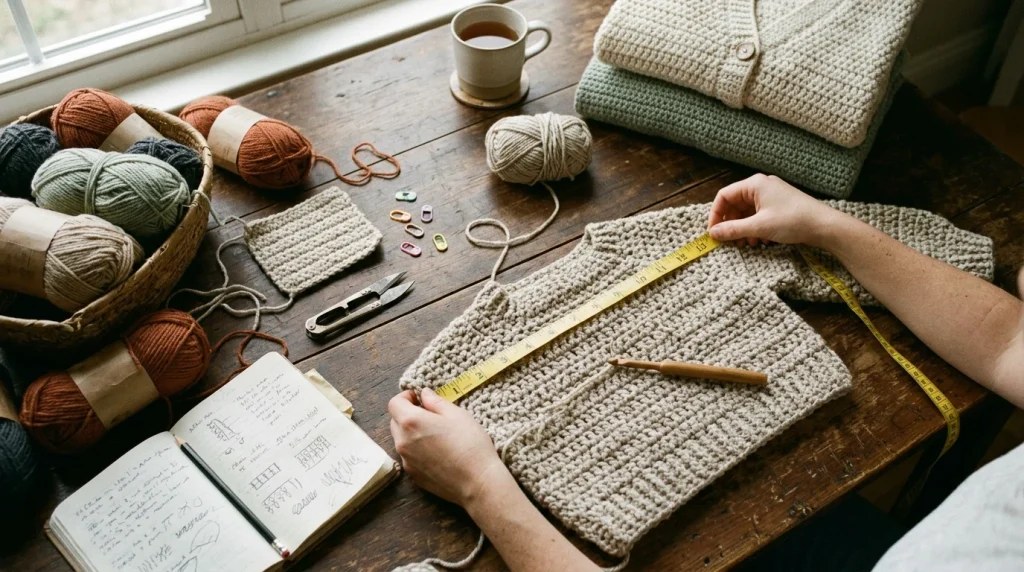
Fit starts with measurements.
Measure the body area the garment needs to cover rather than choosing a size based only on a standard clothing label. For a sweater or top, this usually includes the bust or chest, while sleeves require upper-arm and length measurements.
You should also consider ease. Ease is the difference between your body measurement and the finished garment measurement.
A close-fitting garment may have little positive ease, while a loose sweater may have considerably more. The right amount depends on the design and the fabric.
Current crochet garment sizing guidance also recommends comparing finished measurements with a garment you already like, rather than relying only on the size label.
Why Gauge Matters?
Gauge is one of the most important crochet clothing patterns tips because it directly affects size.
Gauge tells you how many stitches and rows fit into a certain measurement. If your stitches are larger than the pattern’s gauge, your garment can become wider. If they’re smaller, it can come out narrower.
For fitted clothing, make your swatch using the same yarn, hook, and main stitch used in the garment.
Don’t measure only the fresh swatch if the pattern calls for blocking or washing. The fabric can change after treatment, so measuring after the required process gives you a more useful result.
Choosing Yarn for Crochet Clothing
Yarn affects more than color.
It changes the weight, softness, drape, stretch, warmth, and structure of the finished garment.
For a summer top, you may prefer a lighter yarn and an open stitch. For a winter sweater, a warmer yarn and denser stitch can make more sense.
Before purchasing yarn, check its:
- Fiber content
- Weight
- Recommended hook size
- Washing instructions
- Yardage per ball or skein
- Gauge information
Don’t choose yarn simply because the color looks good in the shop. The finished fabric needs to behave properly for the garment you’re making.
How to Read a Crochet Clothing Pattern?a
A useful crochet clothing patterns tutorial should give you enough information to understand the entire construction before you begin.
Look for:
- Abbreviations
- Stitch instructions
- Gauge
- Size chart
- Finished measurements
- Yarn information
- Hook information
- Construction notes
- Assembly instructions
- Finishing instructions
Read the pattern once before starting. This helps you understand where the garment changes direction, where pieces are joined, and when you need to check measurements.
Free Crochet Clothing Patterns vs Paid Patterns
There are plenty of free crochet clothing patterns online, and they can be a good way to experiment with garment making without buying a pattern.
However, free doesn’t automatically mean easier.
Before starting a free pattern, check whether it includes the sizes you need, finished measurements, gauge information, clear photographs, and enough instructions for the construction.
Paid patterns may include more sizes, diagrams, photographs, detailed shaping instructions, and additional support. Whether that extra information is worth paying for depends on your experience and the complexity of the garment.
Common Problems When Making Crochet Clothing
The garment is too large
Check your stitch gauge first. If you have fewer stitches than the pattern specifies over the same measurement, your stitches are larger.
Also check the yarn and hook. A change in either can affect the fabric.
The garment is too small
The opposite problem can happen when your stitches are smaller than the pattern gauge.
Don’t simply keep adding rows without checking the width. A garment can have the correct length while still being too narrow.
The sleeves don’t fit
Sleeve fit depends on more than sleeve length. Check the upper-arm measurement, armhole depth, and sleeve circumference.
The fabric feels too stiff
The stitch pattern and yarn both affect drape. A dense stitch with a thick yarn can produce a firm fabric, while a lighter yarn and more open stitch can create a softer result.
The garment changes after washing
Always follow the care instructions for your yarn. Some fibers relax or change shape after washing, which is another reason a properly treated gauge swatch is useful.
FAQs
What are the easiest crochet clothing patterns for beginners?
Simple vests, shrugs, loose ponchos, tank tops, and oversized cardigans can be good starting points. They generally involve less shaping than fitted sweaters or dresses.
What are the best crochet clothing patterns for summer?
Lightweight tops, tank tops, loose tunics, boleros, and open-stitch cardigans are good options. The yarn and stitch should create a fabric that is comfortable in warm weather.
Can I make crochet clothing without a gauge swatch?
You can, but skipping gauge is risky when the finished size matters. Even a small difference in stitch size can become significant across a sweater or other large garment.
How do I choose the right size for crochet clothing?
Take your body measurements and compare them with the pattern’s finished garment measurements. Don’t rely only on the S, M, L, or XL label. Consider the amount of ease included in the design as well.
What yarn is best for crochet clothing?
There isn’t one yarn that works for every garment. Choose based on the season, desired drape, warmth, stretch, care requirements, and pattern gauge.

Leave a Reply