
A poncho is one of the fastest garments you can crochet, because it skips almost everything that makes clothing hard to make. There’s no sleeve to set in, no fitted armhole, no gauge-critical shoulder shaping — just flat or circular pieces joined with a head opening. This collection of free crochet patterns poncho ideas covers five different construction methods, from a single seamed rectangle to a fully circular piece worked in the round, so you can pick whichever matches the stitches you already know.
Every pattern below is built from standard, well-documented crochet technique rather than one designer’s copyrighted pattern, which means you’re free to resize, restyle, or mix elements between them. None of these are personally tested pieces from a specific maker’s project bag — they’re reliable, technique-grounded constructions, so treat the yardage and row counts as solid starting points and adjust to your own gauge as you go.
What makes these free crochet patterns poncho ideas actually beginner-friendly?
Each of the five uses only chain stitch, single crochet, half double crochet, or double crochet — no cables, no complicated colorwork, nothing that requires a stitch chart. Hook sizing and yarn weight follow the Craft Yarn Council’s standard yarn weight system, so if you’re substituting yarn, that chart tells you exactly which hook range keeps the fabric behaving the way it’s meant to.
Worth knowing before you start: a poncho isn’t a modern invention crochet borrowed a shape from. Wikipedia’s entry on the poncho traces it back to South American weaving traditions, long before crochet existed as a technique — which is part of why the shape is so forgiving. It was designed around a single rectangle of cloth and a head opening, and crochet just replicates that same simple geometry stitch by stitch.
Table of Contents
1. The Two-Panel Rectangle Poncho
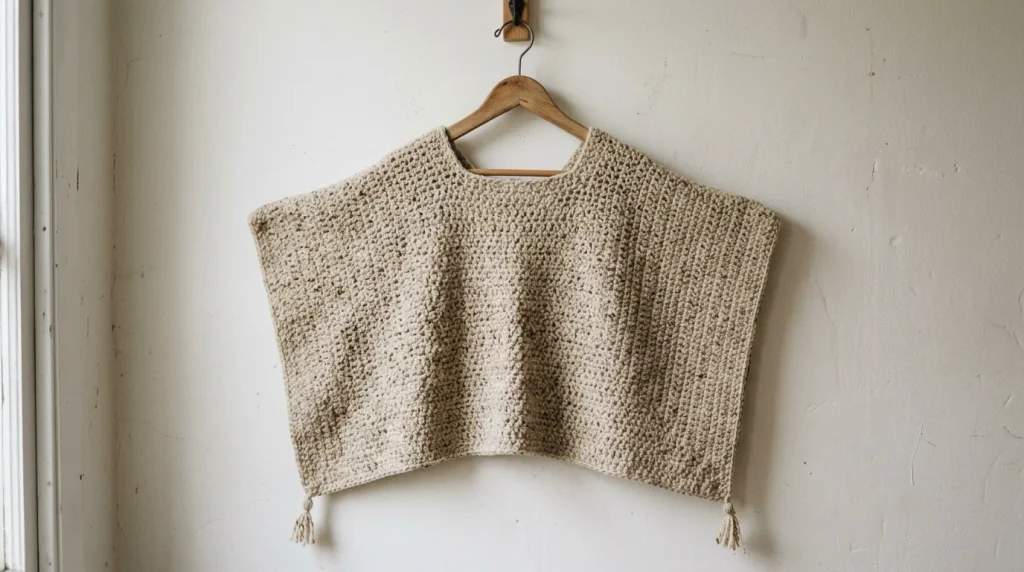
This is the most direct route from “I can double crochet” to a finished free crochet patterns poncho.
Skill level: Absolute beginner
Yarn: Worsted weight (#4), roughly 900–1,100 yards
Hook: 5.5–6 mm (I–J)
Crochet two identical rectangles, each about 16–18 inches wide and long enough to reach from shoulder to hip on you. Work them in straightforward rows of double crochet, turning with a chain-3 at the start of every row. Once both panels are done, lay them on top of each other and seam along two adjacent sides — one shoulder seam and one side seam per panel — leaving gaps for the head and arms. The unsewn edges become the front and back opening. It’s essentially two identical rectangles and two seams, which makes it a genuinely reasonable first-garment project.
2. Granny Square Poncho
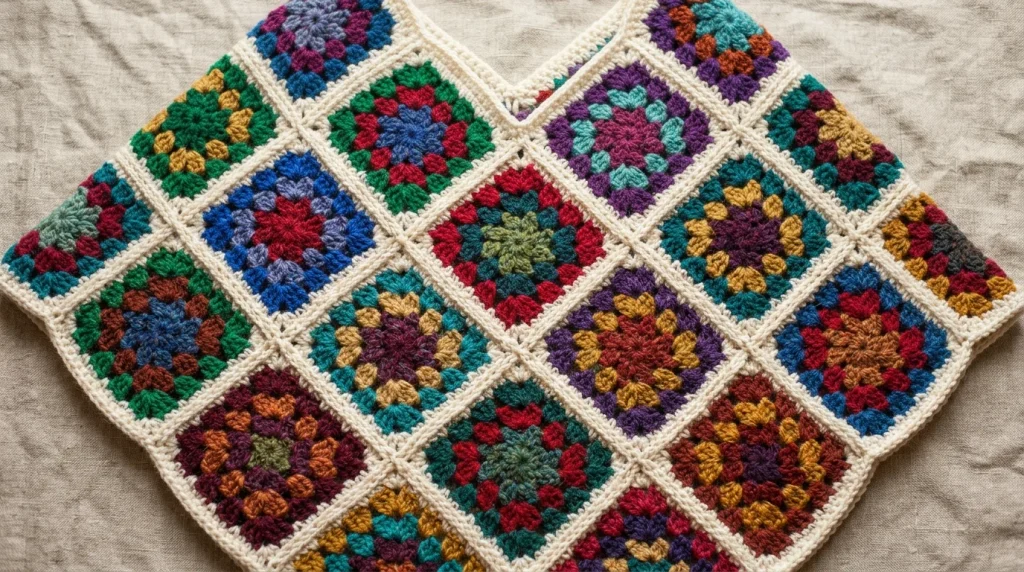
If you already have a granny square habit, this free crochet patterns poncho option puts that stash of squares to actual use.
Skill level: Beginner, comfortable with basic stitches
Yarn: DK or worsted weight, mixed colors work well here
Hook: 5–5.5 mm (H–I)
Make a set of standard granny squares — the classic 3-dc-cluster-per-round version — until you have enough to form two panels, front and back. Join the squares into two rectangular panels using slip stitch or single crochet seams, then join the two panels at the shoulders the same way you would the rectangle poncho above, leaving the neck and arm openings unsewn. Because each square is small and portable, this version travels well — it’s the poncho to work on if you want something you can pick up in short sessions rather than committing to long uninterrupted rows.
3. Circular Poncho Worked in the Round

Worked from the neck down or the hem up, this circular version of the free crochet patterns poncho avoids seaming altogether.
Skill level: Beginner-intermediate
Yarn: Worsted weight (#4), around 1,000–1,200 yards
Hook: 6 mm (J)
Start with a foundation ring at the neck, chain up, and work double crochet in rounds, increasing evenly around the circle every round or two — typically by working 2 dc into the same stitch at 6–8 evenly spaced points per round, the same increase logic used in a standard circular motif. Keep increasing until the piece drapes past the shoulders and reaches the length you want, then fasten off. Because it’s worked in one continuous piece, there’s no seaming step at all, which makes it the fastest of the five to actually finish once you’re moving.
4. V-Stitch Folded Poncho
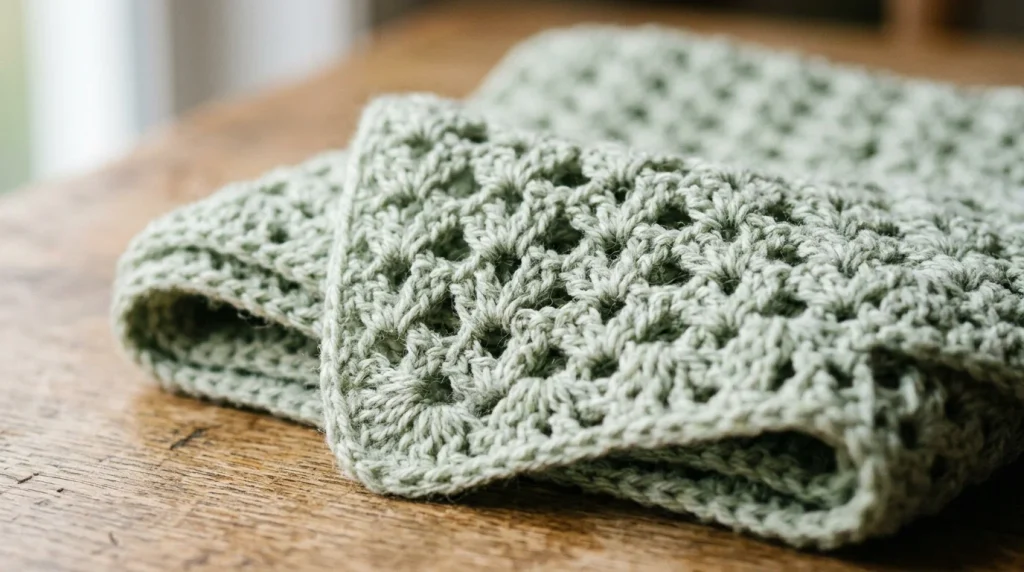
Same V-stitch logic as an open, airy shawl, folded into poncho shape instead.
Skill level: Beginner, comfortable with basic stitches
Yarn: Light worsted or DK (#3), around 850–950 yards
Hook: 5 mm (H)
Crochet a single large rectangle in V-stitch — (dc, ch 1, dc) into a stitch, skipping a stitch between repeats, then working a V-stitch into every chain-1 space on the rows that follow. Once the rectangle is long enough to wrap comfortably from shoulder to shoulder with extra length for drape, fold it in half and seam a short section at each fold to form the shoulders, leaving the center open for the head. The open stitch structure makes this the lightest of the five, better suited to layering over a top than replacing a jacket.
5. Corner-to-Corner (C2C) Poncho
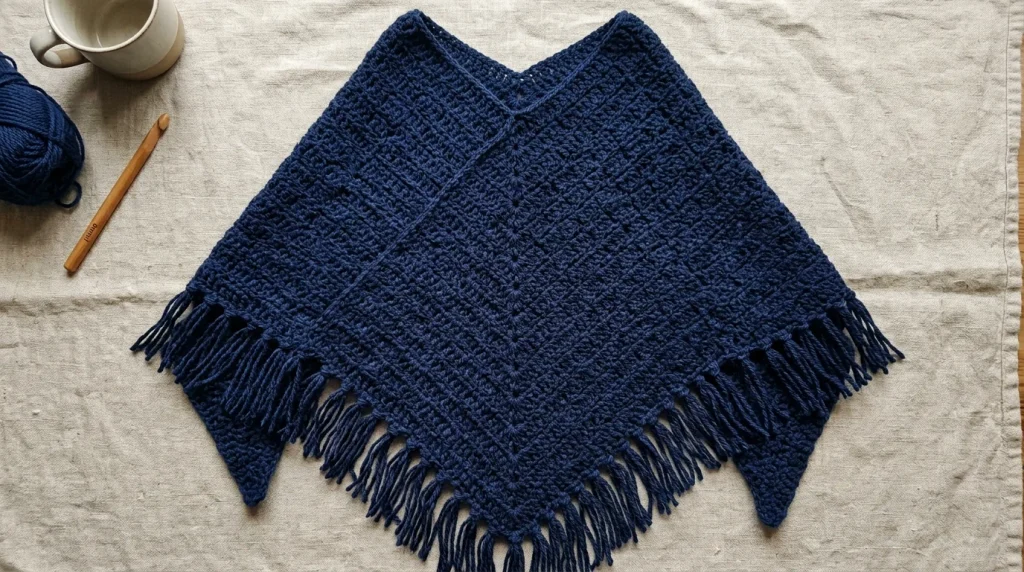
Two simple C2C triangles, joined down the center, form a poncho with more visual texture than the plain rows above.
Skill level: Beginner-intermediate
Yarn: Worsted weight (#4), around 1,000 yards
Hook: 5.5 mm (I)
Work two identical C2C triangles — blocks of 3 dc built into chain-3 spaces, increasing at the start of every row until the triangle reaches the width you want. Join the two triangles along one long edge, leaving a gap at the center for the head, and the two triangles fall into a poncho silhouette on their own, with points hanging at the front, back, and sides. It takes a few rows to get the increase rhythm going, but the diagonal blocks give the finished piece a noticeably different texture from a plain rectangle.
Getting size and fit right
None of these five free crochet patterns poncho builds have a single fixed measurement, because fit varies more by preference than most other garments — some people want it hitting at the hip, others prefer something cropped. Measure from the base of your neck to wherever you want the hem to fall, and use that as your target length for whichever construction you’re working. For the two panel-based patterns, add roughly 2 inches to the shoulder-to-shoulder width beyond your actual shoulder measurement so the fabric drapes rather than pulling tight across the chest.
Gauge swatching matters more here than it might seem for something this simple, particularly for the circular version — if your increases are too tight, the poncho cups instead of draping flat, and if they’re too loose, it ruffles at the edge instead of lying smooth.
Choosing between these free crochet patterns poncho options
If you want the fastest possible result, start with the two-panel rectangle or the circular version — both are long, uninterrupted rows or rounds with minimal counting. The granny square poncho is the one to reach for if you’d rather work in short bursts on a project you can pick up and put down, since each square is a self-contained unit. The V-stitch version suits transitional weather better than the others, since the open stitch pattern breathes more than a solid double crochet fabric. C2C is worth trying once you want texture, but expect the first several rows to feel slower than the others while the increase pattern settles into rhythm.
FAQs
Can I substitute a different yarn weight than the pattern calls for?
Yes — adjust your hook size using the Craft Yarn Council’s chart to match the new yarn weight, and expect the finished size and yardage needed to shift with it.
Why does my circular poncho look ruffled at the edges instead of flat?
That’s usually too many increases per round for the stitch height you’re working in. Try increasing at fewer points around the circle, or spacing the increase rounds one round further apart.
How much yarn do I actually need for a free crochet pattern poncho?
The ranges above are reasonable starting points, but the real answer depends on your gauge and the finished size you’re after. Crochet a swatch, weigh it, and use that to estimate how far a full skein will stretch before buying materials for the whole project.
Are these free crochet patterns poncho designs okay to sell finished pieces from?
These instructions describe standard, non-proprietary construction methods rather than one designer’s original pattern, so the techniques themselves aren’t restricted the way a purchased pattern’s written instructions would be — but always check your own local rules around selling handmade items before listing anything.
Which of these five is the warmest?
The two-panel rectangle and the circular version use the densest fabric of the five, since solid double crochet rows don’t have the open gaps that V-stitch or granny squares do. If warmth is the priority over drape, either of those two is the better starting point; save the V-stitch version for a layering piece rather than a primary outer layer.

Leave a Reply